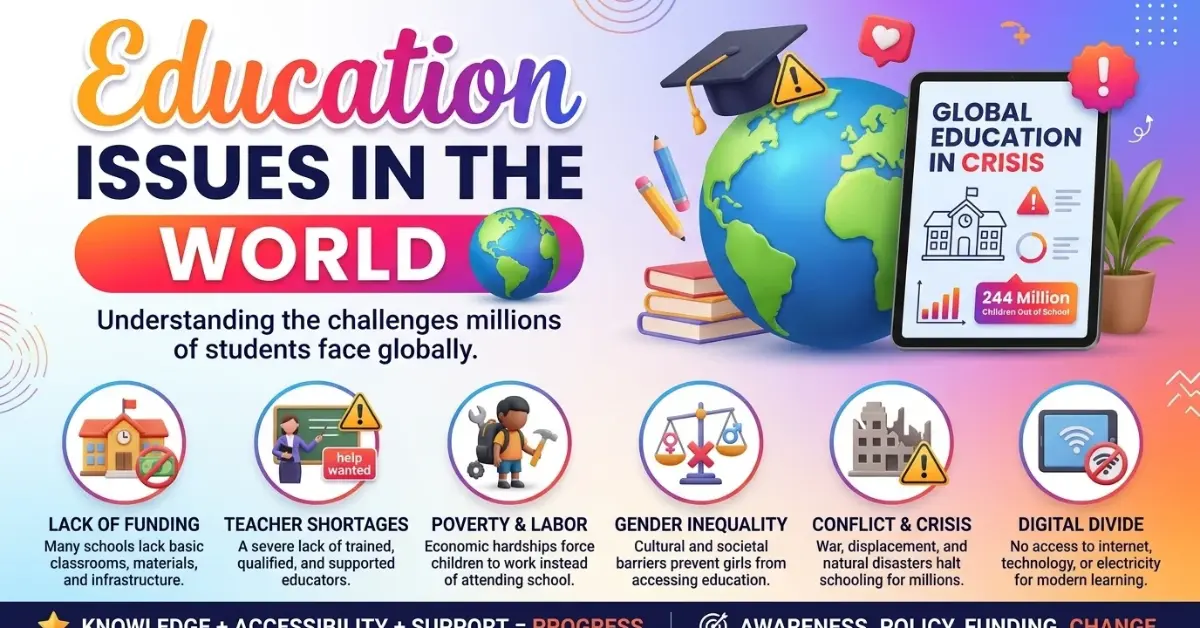
Education Issues in the World, Affect millions of children who want to learn and build a better future. Many students face problems such as poverty, a lack of trained teachers, poor school facilities, and high education costs. Some children cannot attend school because of war, family problems, or a lack of nearby schools. These challenges make it harder for students to gain knowledge and find good jobs in the future. Understanding education issues in the world can help us find simple and effective ways to give every child a fair chance to learn and succeed.
Understanding Education Issues in the World
Understanding education issues in the world is important because every child deserves a chance to learn and build a better future. Many students face problems such as poverty, a lack of teachers, poor school facilities, and high education costs. Some children cannot attend school because they live in remote areas or unsafe places. These problems affect their learning, future jobs, and quality of life. By understanding these challenges, we can find better ways to provide safe, fair, and quality education for everyone.
The Biggest Problems Facing Schools Today
Many schools around the world face challenges that make it difficult for students to learn and succeed. The main problems include:
- Lack of Teachers: Many schools do not have enough trained teachers to help students learn.
- Poor School Facilities: Some schools lack clean water, proper classrooms, libraries, and basic learning materials.
- Overcrowded Classrooms: Too many students in one class make it hard for teachers to give individual attention.
- High Education Costs: Poor families may struggle to pay for books, uniforms, and transport.
- Unequal Learning Opportunities: Children in rural and poor areas often have fewer educational resources.
Solving these problems can help schools provide better learning opportunities and build a brighter future for every student.
How Technology Creates New Challenges in Education
Technology makes learning easier, but it also creates problems for students and teachers around the world.
- Limited Internet Access: Many students cannot attend online classes because they lack a reliable internet connection.
- Lack of Digital Devices: Poor families may not afford computers, tablets, or smartphones for learning.
- Online Distractions: Games, social media, and videos can distract students from their studies.
- Digital Skills Gap: Some teachers and students do not know how to use learning technology properly.
- High Technology Costs: Schools may struggle to afford computers, software, and other digital tools.
Providing affordable technology and proper training can help students enjoy its benefits and overcome these educational challenges.
How Poverty and Family Problems Affect Education
Poverty and family problems can make it difficult for children to attend school regularly and focus on their studies.
- Lack of Money: Poor families may not afford school fees, books, uniforms, and transport.
- Child Labour: Some children work to support their families instead of attending school.
- Family Responsibilities: Children may miss classes because they need to care for younger siblings or help at home.
- Poor Nutrition: Hunger and a lack of healthy food can reduce students’ energy and concentration.
- Family Stress: Problems at home can affect children’s mental well-being and academic performance.
Financial support, family care, and access to basic needs can help children continue their education and achieve their goals.
How Technology Creates New Challenges in Education
Technology helps students learn, but it can also create problems for schools and families. The main challenges include:
- Lack of Internet Access: Many students cannot attend online classes because they do not have a reliable internet connection.
- High Cost of Devices: Computers, tablets, and smartphones are too expensive for some families.
- Digital Distractions: Games, social media, and videos can take students’ attention away from their studies.
- Limited Digital Skills: Some teachers and students do not know how to use educational technology properly.
- Online Safety Risks: Students may face cyberbullying, false information, or privacy problems online.
Using technology safely and fairly can help students enjoy its benefits while reducing these educational challenges.
How War, Disasters and Climate Change Disrupt Schools
War, natural disasters, and climate change can stop children from attending school and make learning difficult.
- War and Conflict: Fighting can damage schools, force families to leave their homes, and interrupt lessons.
- Floods and Earthquakes: Natural disasters can destroy school buildings and learning materials.
- Extreme Weather: Very high temperatures and heavy rain can make classrooms unsafe and cause school closures.
- Displaced Children: Children who move to safer places may struggle to find new schools and continue their studies.
- Lack of Resources: After disasters, schools may lack books, clean water, electricity, and trained teachers.
Safe schools, emergency support, and better preparation can help children continue their education during difficult times.
The Impact of Digital Inequality on Modern Learning
Digital inequality means some students have better access to technology and the internet than others, which can affect their education.
- Limited Internet Access: Some students cannot attend online classes or find learning materials.
- Lack of Devices: Students without computers or tablets may struggle to complete schoolwork.
- Unequal Learning Opportunities: Students with better technology often have more ways to learn and practice.
- Poor Digital Skills: Limited access to technology can make it harder to develop useful computer skills.
- Learning Delays: Students may fall behind when they cannot access online lessons and educational resources.
Providing affordable internet and digital devices can help create fairer learning opportunities for all students.
How Global Conflicts and Natural Disasters Affect Education
Wars and natural disasters can interrupt children’s education and make schools unsafe.
- School Damage: Wars, floods, and earthquakes can destroy school buildings.
- Interrupted Lessons: Students may miss classes because schools close during emergencies.
- Family Displacement: Children who leave their homes may struggle to find new schools.
- Lack of Resources: Disasters can cause shortages of books, food, and clean water.
- Emotional Stress: Fear and sadness can make it difficult for children to focus on learning.
Safe schools and emergency support can help children continue their education during difficult times.
Effective Strategies to Improve Education Around the World
Several simple strategies can help improve education and give every child a fair chance to learn.
- Free Education: Make schooling affordable for all children.
- Teacher Training: Help teachers improve their teaching skills.
- Better School Facilities: Provide safe classrooms, books, and clean water.
- Digital Learning: Give students access to computers and the internet.
- Financial Support: Help poor families pay for school supplies and transport.
- Equal Opportunities: Ensure every child can receive a quality education.
These strategies can improve learning and create a brighter future for children around the world.
How Education Problems Affect Children and Society
Education problems can harm children’s futures and slow the progress of society in many ways.
- Poor Learning: Students may struggle with reading, writing, and basic math.
- Unemployment: A lack of education can reduce job opportunities.
- Poverty: Families may find it harder to improve their living conditions.
- Low Confidence: Learning difficulties can make children feel worried or discouraged.
- Social Inequality: Unequal education can increase the gap between rich and poor people.
- Slow Development: Countries may lack skilled workers needed for economic growth.
Improving education helps children succeed and builds a stronger, healthier society.
Common FAQs about Education Issues in the World
Here are some FAQs of Education Issues in the World:
How does a lack of early childhood education affect children?
A lack of early childhood education can make it harder for children to develop language, social, and problem-solving skills. Quality preschool programs help children prepare for primary school.
What is the learning poverty problem?
Learning poverty happens when children cannot read and understand a simple text by around age 10. It shows that attending school does not always mean children are learning basic skills.
How does language affect students’ education?
Children may struggle when lessons are taught in a language they do not understand well. Teaching younger students in a familiar language can help them understand lessons and build confidence.
Why do children with disabilities face educational barriers?
Some schools lack ramps, accessible toilets, suitable learning materials, or trained support staff. These barriers can prevent children with disabilities from joining lessons and school activities equally.
How does a lack of school meals affect learning?
Hungry children may find it difficult to concentrate, remember information, and take part in class. School meal programs can support children’s nutrition and help them focus on learning.
Why is vocational education important for young people?
Vocational education teaches practical skills for specific jobs, such as electrical work, cooking, computer repair, and plumbing. It can help young people prepare for employment and earn a living.
How can school bullying become an education problem?
Bullying can make students feel unsafe, anxious, and unwilling to attend school. Schools can reduce this problem through clear rules, trusted staff, and safe ways for students to report bullying.
Why is adult education important around the world?
Adult education helps people improve their reading, writing, digital, and work skills later in life. It gives adults another chance to learn, find better jobs, and manage everyday tasks more independently.
Conclusion
Education issues in the world remain a major challenge for children, families, and communities. Problems such as unequal learning opportunities, poor school facilities, digital inequality, and a lack of trained teachers can prevent students from reaching their goals. Governments, teachers, parents, and communities must work together to make education fair, safe, and affordable for everyone. By improving schools, supporting disadvantaged students, and providing better learning resources, we can create more opportunities for future generations.