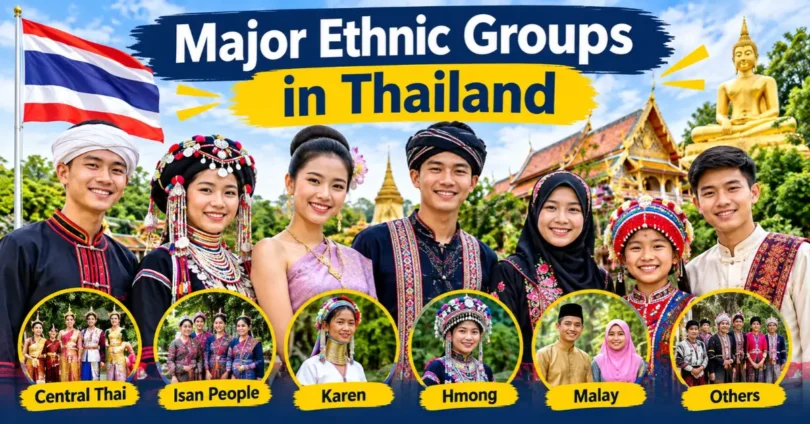
Thailand is a country with many different ethnic communities, and each group has its own history, language, traditions, and way of life. The Major Ethnic Groups in Thailand, Include Central Thai, Isan, Northern Thai, Thai-Chinese, Malay, Karen, Hmong, and several other communities. These people make Thailand culturally rich through their traditional clothing, local food, festivals, music, and beliefs. Some communities live in busy cities, while others live in mountain villages, farming areas, and coastal regions. Learning about these groups helps us understand Thailand’s history, people, and cultural beauty.
Understanding Ethnic Diversity in Thailand
Understanding Ethnic Diversity in Thailand helps us explore the country’s rich cultural heritage, traditions, and history. The major ethnic groups in Thailand include Thai, Chinese, Malay, Mon, Khmer, Karen, Hmong, and Lahu communities. Each ethnic group has its own unique customs, languages, traditional clothing, festivals, and lifestyles. Together, these communities contribute to Thailand’s cultural richness and create a diverse society that reflects the country’s fascinating history and traditions.
Major Ethnic Groups in Thailand and Their Backgrounds
Thailand has many ethnic groups, and each community has its own history, culture, and traditions.
- Central Thai: The largest ethnic community, mainly living in central Thailand.
- Isan: People of northeastern Thailand with strong Lao cultural influences.
- Northern Thai: Known for their Lanna culture and traditional festivals.
- Thai Chinese: A community with Chinese roots that has influenced Thai food and business.
- Malay: Mainly found in southern Thailand, with Malay language and Islamic traditions.
- Karen: Known for traditional weaving and village life.
- Hmong: Famous for colorful clothes and handmade embroidery.
- Akha: Recognized for their traditional hats and cultural customs.
- Lahu: A mountain community with rich music and traditions.
- Lisu: Known for colorful clothing and community celebrations.
- Mien: Famous for detailed embroidery and traditional dress.
Together, these ethnic communities make Thailand a country with a rich and colorful cultural identity.
The Main Cultural Communities Found Across Thailand
Thailand has several cultural communities, and each one has its own lifestyle, traditions, and regional identity.
- Central Thai People: Mainly live in central Thailand and are known for their language, food, and Buddhist traditions.
- Isan Communities: Live in the northeast and have strong Lao cultural influences, including music and local food.
- Northern Thai People: Follow Lanna traditions and are known for their unique festivals and crafts.
- Southern Thai Communities: Have a mix of Thai and Malay cultural influences, especially in food and daily life.
- Thai Chinese People: Have Chinese family roots and contribute to Thailand’s business, food, and festivals.
These communities help shape Thailand’s cultural identity through their different customs, languages, and ways of life.
Where Do Different Ethnic Groups Live in Thailand?
Different ethnic communities live across Thailand, from mountain villages to busy cities and coastal areas.
- Northern Thailand: Karen, Hmong, Akha, Lahu, Lisu, and Mien communities live mainly in mountain areas.
- Northeastern Thailand: Isan, Kuy, and Khmer communities are found in this region.
- Central Thailand: Central Thai, Thai-Chinese, and Mon communities live in cities, towns, and villages.
- Southern Thailand: Malay communities are common in the southern provinces, especially near the Malaysian border.
- Western Thailand: Karen communities are found in several areas near the Myanmar border.
- Coastal Areas: Moken communities traditionally live along the Andaman Sea coast and nearby islands.
Each region has its own cultural mix, making Thailand rich in different traditions and lifestyles.
Religion and Beliefs Among Ethnic Groups in Thailand
Different ethnic communities in Thailand follow various religions and spiritual traditions.
- Buddhism: Many Thai, Isan, and other communities follow Buddhism and visit temples for prayers and festivals.
- Islam: Malay communities in southern Thailand mainly follow Islam and celebrate Islamic festivals.
- Christianity: Some Karen, Hmong, and other ethnic communities follow Christianity.
- Traditional Beliefs: Some groups respect nature, ancestors, spirits, and traditional healing practices.
- Hindu Influences: Hindu ideas and traditions can also be seen in some Thai cultural ceremonies.
These different religions and beliefs add to Thailand’s cultural richness and encourage respect among communities.
Challenges Faced by Ethnic Minorities in Thailand
Ethnic minority communities in Thailand face different problems that can affect their daily lives, culture, and future.
- Language Barriers: Some people find it difficult to access education and services because they speak different languages.
- Education Problems: Children in remote villages may have limited access to good schools.
- Land Rights: Some communities face difficulties protecting their traditional homes and farming lands.
- Cultural Loss: Younger generations may slowly forget their traditional languages and customs.
- Citizenship Issues: Some people face difficulties getting legal documents and full access to public services.
- Job Opportunities: People in remote areas may have fewer chances to find stable work.
- Discrimination: Some ethnic minorities experience unfair treatment because of their cultural background.
Addressing these challenges can help protect ethnic communities and create equal opportunities for everyone.
How Ethnic Communities Contribute to Thai Society
Different ethnic communities help Thailand grow by sharing their skills, traditions, and knowledge.
- Agriculture: Many communities support farming by growing rice, fruits, vegetables, and other crops.
- Local Businesses: Ethnic groups contribute to markets, shops, trade, and small businesses.
- Traditional Crafts: They keep handmade clothing, weaving, pottery, and other local arts alive.
- Tourism: Cultural festivals, traditional villages, and local customs attract visitors.
- Food Culture: Different communities add unique dishes, cooking styles, and flavors to Thai food.
- Music and Dance: Their traditional songs, instruments, and dances enrich Thai cultural life.
- Environmental Knowledge: Some communities share valuable knowledge about forests, plants, and nature.
Together, these contributions make Thai society stronger, more diverse, and culturally rich.
How Younger Generations Are Keeping Their Cultures Alive
Young people in Thailand are finding new ways to protect their cultural traditions and share them with others.
- Learning Native Languages: Children learn traditional languages from parents and grandparents.
- Celebrating Festivals: Young people take part in cultural festivals and local events.
- Wearing Traditional Clothes: They wear cultural outfits during special celebrations.
- Learning Traditional Arts: Many young people practice folk music, dance, weaving, and handmade crafts.
- Using Social Media: They share their culture, food, and traditions through online platforms.
- Visiting Cultural Places: Young generations visit local villages, museums, and historical sites to learn about their roots.
These efforts help keep Thailand’s cultural traditions alive for future generations.
Major Changes in Ethnic Communities in Modern Thailand
Ethnic communities in modern Thailand are experiencing changes in their lifestyles, education, jobs, and cultural activities.
- Modern Education: More children from ethnic communities are attending schools and colleges.
- New Job Opportunities: People are working in offices, businesses, tourism, and other industries.
- Urban Migration: Some families are moving from villages to cities for better jobs and education.
- Technology Use: Smartphones and the internet help communities share their traditions and stories.
- Changing Lifestyles: Younger generations are mixing modern habits with traditional customs.
- Cultural Awareness: More people are using festivals and cultural events to celebrate their heritage.
These changes are helping ethnic communities adjust to modern life while keeping their cultural identities alive.
How Geography Shapes Ethnic Communities in Thailand
Thailand’s mountains, rivers, forests, and coastal areas influence where ethnic communities live and how they spend their daily lives.
- Mountain Areas: Groups such as Karen, Hmong, Akha, and Lahu live in northern mountain regions.
- River Valleys: Many communities grow rice and other crops near rivers and fertile land.
- Coastal Regions: Moken communities have a strong connection with fishing and sea life.
- Border Areas: Communities near Myanmar, Laos, Cambodia, and Malaysia share cultural and language influences with neighboring countries.
- Forest Regions: Some communities depend on forests for food, plants, and traditional resources.
- Farming Areas: People in rural regions often grow rice, fruits, and vegetables for their families and local markets.
Geography plays an important role in shaping the lifestyles, traditions, and cultural identities of Thailand’s ethnic communities.
Common FAQs about Major Ethnic Groups in Thailand
Here are some FAQs of Major Ethnic Groups in Thailand:
What is the difference between ethnicity and nationality in Thailand?
Ethnicity describes a person’s cultural background, while nationality refers to their legal connection to a country. A person can be Thai by nationality and belong to different ethnic backgrounds.
Do ethnic communities in Thailand have their own festivals?
Yes, many communities celebrate special festivals based on their history, beliefs, farming seasons, and local traditions.
What is Lanna culture in Thailand?
Lanna culture comes from the old northern Thai kingdom. It is known for traditional architecture, crafts, music, food, and festivals.
Are ethnic communities in Thailand involved in traditional handicrafts?
Yes, many communities create handmade textiles, baskets, jewelry, embroidery, and other crafts using skills passed down through generations.
What role do grandparents play in preserving ethnic traditions?
Grandparents often teach children traditional stories, songs, languages, cooking methods, and family customs.
Do ethnic communities in Thailand have different wedding customs?
Yes, wedding traditions can vary between communities. Some include special clothing, family ceremonies, traditional music, and local customs.
How do ethnic communities protect their cultural heritage?
They organize cultural events, teach traditional skills, preserve old stories, and pass their languages and customs to younger generations.
Can visitors learn about ethnic cultures in Thailand?
Yes, visitors can learn through cultural museums, community-based tourism, traditional markets, local festivals, and heritage villages.
Conclusion
The Major Ethnic Groups in Thailand make the country rich in culture, history, and traditions. Each community has its own language, food, clothing, beliefs, and way of life. From the Central Thai and Isan people to the Karen, Hmong, Malay, and other ethnic communities, everyone plays an important role in Thai society. These groups also contribute to local businesses, farming, tourism, music, and traditional arts. Learning about their cultures helps us understand Thailand’s diverse population and respect different ways of life. Protecting their traditions and languages is important for future generations.