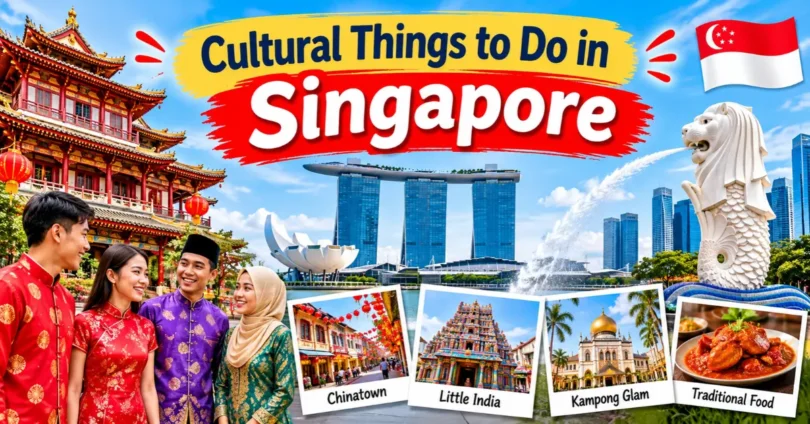
Singapore is a beautiful country with a rich mix of cultures, traditions, and history. It is home to Chinese, Malay, Indian, and many other communities that make its culture special. There are many Cultural Things to Do in Singapore, from exploring historic neighborhoods and visiting traditional temples to tasting local food and enjoying colorful festivals. Visitors can also discover traditional arts, museums, markets, and local customs. These experiences help travelers understand Singapore’s history and enjoy its unique multicultural lifestyle.
Understand the Different Cultures That Shape Singapore
Singapore is a multicultural country where people from different backgrounds live together. Its culture is mainly shaped by Chinese, Malay, Indian, and Eurasian communities. Each group has its own language, food, clothing, festivals, and traditions. Chinese culture is known for its family values and celebrations, while Malay culture is famous for its traditional music and customs. Indian culture adds colorful festivals, delicious food, and beautiful art. Eurasian communities also contribute to Singapore’s history and lifestyle. Learning about these different cultures helps visitors understand the country’s identity and enjoy its rich cultural diversity.
Visit Traditional Temples and Religious Landmarks
Singapore has many beautiful religious places where visitors can learn about different beliefs, traditions, and architectural styles.
- Buddha Tooth Relic Temple: Explore Buddhist culture and admire its beautiful traditional design.
- Sri Mariamman Temple: Visit Singapore’s oldest Hindu temple and see its colorful decorations.
- Sultan Mosque: Discover Islamic heritage and admire its impressive golden dome.
- St. Andrew’s Cathedral: Explore a historic church known for its beautiful architecture.
These religious landmarks help visitors understand Singapore’s diverse beliefs, history, and cultural traditions.
Explore Singapore’s Historic Cultural Neighborhoods
Singapore has several historic neighborhoods where visitors can experience different cultures, traditions, and local lifestyles.
- Chinatown: Explore Chinese temples, traditional shops, colorful streets, and local food.
- Little India: Discover Indian culture through colorful markets, traditional clothing, temples, and delicious dishes.
- Kampong Glam: Learn about Malay and Muslim heritage, visit historic buildings, and explore traditional shops.
- Katong and Joo Chiat: Admire beautiful Peranakan shophouses, traditional designs, and local heritage.
These neighborhoods offer a wonderful way to explore Singapore’s history and multicultural traditions.
Learn About Local History in Singapore’s Museums
Singapore’s museums help visitors understand the country’s history, cultural traditions, and the lives of its people.
- National Museum of Singapore: Learn about Singapore’s past, important events, and national development.
- Asian Civilisations Museum: Discover the art, history, and traditions of different Asian communities.
- Peranakan Museum: Explore Peranakan clothing, furniture, crafts, and family traditions.
- Malay Heritage Centre: Learn about Malay history, culture, and heritage through interesting displays.
Visiting these museums is a great way to learn about Singapore’s history and cultural identity.
Taste Singapore’s Traditional Food Culture
Singapore is famous for its delicious food, which reflects Chinese, Malay, and Indian cooking traditions.
- Hainanese Chicken Rice: Enjoy soft chicken served with fragrant rice, sauces, and soup.
- Nasi Lemak: Try coconut rice served with spicy sambal, eggs, peanuts, and other side dishes.
- Roti Prata: Taste a crispy Indian-style flatbread often served with curry.
- Hawker Centres: Visit local food centres to enjoy different traditional dishes at affordable prices.
Trying traditional Singaporean food is a delicious way to experience the country’s multicultural heritage.
Experience Singapore’s Traditional Festivals
Singapore celebrates many colorful festivals that bring different communities together and show their cultural traditions.
- Chinese New Year: Enjoy dragon dances, family gatherings, lanterns, and festive decorations.
- Deepavali: Experience beautiful lights, colorful decorations, and celebrations in Little India.
- Hari Raya Aidilfitri: Learn about Malay Muslim traditions, family visits, special meals, and prayers.
- Mid Autumn Festival: Enjoy lantern displays, mooncakes, and traditional family celebrations.
These festivals offer visitors a wonderful opportunity to enjoy Singapore’s rich cultural traditions and community spirit.
Walk Through Heritage Streets and Traditional Markets
Singapore’s heritage streets and traditional markets offer a great way to explore local culture, shopping, and everyday life.
- Haji Lane: Walk through colorful streets filled with street art, small shops, and unique cafes.
- Bugis Street Market: Explore affordable clothing, souvenirs, accessories, and local products.
- Chinatown Street Market: Find traditional Chinese decorations, gifts, and cultural items.
- Little India Arcade: Discover Indian clothing, jewelry, spices, and handmade products.
These streets and markets help visitors enjoy Singapore’s local lifestyle and cultural traditions.
Enjoy Singapore’s Cultural Architecture
Singapore has beautiful buildings that show the history, traditions, and artistic styles of different communities.
- Peranakan Shophouses: Admire colorful buildings with detailed tiles, wooden doors, and traditional designs.
- Chinese Architecture: Explore temples with decorated roofs, carvings, and traditional symbols.
- Malay Architecture: Discover traditional Malay building styles and beautiful cultural designs.
- Colonial Buildings: Visit historic buildings that reflect Singapore’s colonial past and architectural history.
Exploring Singapore’s architecture helps visitors understand its history and appreciate its cultural diversity.
Join Cultural Workshops and Local Activities
Cultural workshops in Singapore allow visitors to learn traditional skills and take part in fun local activities.
- Traditional Cooking Classes: Learn how to prepare popular Singaporean dishes using local ingredients.
- Batik Painting: Try creating colorful patterns using traditional fabric painting techniques.
- Chinese Calligraphy: Practice writing Chinese characters with traditional brushes and ink.
- Traditional Craft Activities: Explore handmade crafts and learn about local artistic traditions.
Joining these activities helps visitors experience Singapore’s culture through learning and creativity.
Discover Singapore’s History Through Its Museums
Singapore’s museums are great places to explore the country’s past, cultural traditions, and historical development.
- National Museum of Singapore: Learn about important events and how Singapore changed over time.
- Asian Civilisations Museum: Discover the history, art, and traditions of different Asian communities.
- Peranakan Museum: Explore traditional clothing, furniture, jewelry, and Peranakan culture.
- Malay Heritage Centre: Learn about Malay history, traditional lifestyles, and cultural heritage.
Visiting these museums helps travelers understand Singapore’s history and appreciate its diverse cultural background.
Plan a Cultural Day Trip Around Singapore
A cultural day trip is a great way to explore Singapore’s historic places, local food, and different traditions in one day.
- Morning in Chinatown: Visit traditional temples, explore heritage streets, and enjoy a local breakfast.
- Afternoon in Kampong Glam: Discover Malay heritage, visit Sultan Mosque, and explore traditional shops.
- Evening in Little India: Enjoy colorful streets, taste Indian food, and discover local markets.
- Enjoy Local Food: Try different traditional dishes during your cultural journey.
A well-planned day trip helps visitors experience Singapore’s diverse culture, history, and traditions in a short time.
Common FAQs about Cultural Things to Do in Singapore
Here are some FAQs of Cultural Things to Do in Singapore:
What is Singapore’s most famous cultural tradition?
Singapore is known for its multicultural traditions, where Chinese, Malay, Indian, and other communities celebrate their customs while respecting one another.
What is Peranakan culture in Singapore?
Peranakan culture is a unique blend of Chinese and Malay influences. It can be seen in traditional clothing, food, colorful decorations, and handmade crafts.
What is Singlish in Singapore?
Singlish is a local way of speaking English that includes words and expressions from different languages, such as Malay, Chinese dialects, and Tamil.
What traditional clothing is worn in Singapore?
Traditional clothing includes the Malay Baju Kurung, Chinese Cheongsam, and Indian Saree. People often wear these outfits during cultural celebrations and special occasions.
What is Singapore’s national language?
Malay is Singapore’s national language. However, English, Mandarin Chinese, and Tamil are also official languages used in the country.
What is the traditional art of Singapore?
Singapore has several traditional art forms, including Chinese paper cutting, Malay batik painting, Indian kolam designs, and Peranakan beadwork.
Can visitors learn traditional skills in Singapore?
Yes, visitors can join cultural learning sessions that teach traditional crafts, cooking methods, art techniques, and local customs.
Why is Singapore known for its multicultural society?
Singapore is known for its multicultural society because people from different ethnic and cultural backgrounds live, work, and share traditions together.
Conclusion
Singapore is a wonderful destination for travelers who want to explore different cultures, traditions, and lifestyles. From visiting historic neighborhoods and religious landmarks to enjoying traditional food, festivals, and local activities, there are many cultural things to do in Singapore. Visitors can also learn about the country’s history, discover traditional arts, and understand how different communities live together. Each experience offers something special and helps travelers appreciate Singapore’s multicultural identity. Exploring these cultural attractions can make your trip more enjoyable, educational, and memorable.