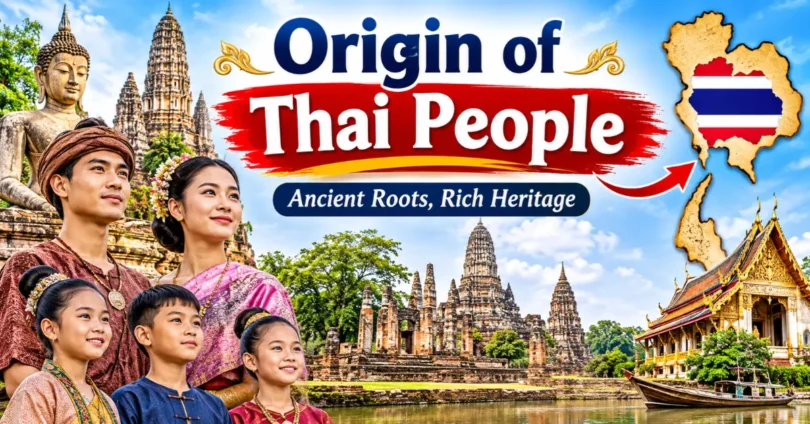
The Origin of Thai People, Is an interesting part of Southeast Asian history. Thai people have a long history shaped by migration, ancient communities, and cultural exchange. Many researchers connect the ancestors of Tai-speaking groups with southern China, where some communities gradually moved south into present-day Thailand and nearby regions.They met local populations, shared traditions, and built new communities. These changes helped shape the language, culture, and identity of modern Thai people. Understanding their origins helps us learn how Thailand developed into the country we know today.
What Does Modern Research Say About the Origin of Thai People?
Modern research explains the Origin of Thai People through DNA, language, and archaeological studies. Scientists believe that many Tai-speaking groups have historical connections with southern China.Some of these groups moved south and settled in different parts of Southeast Asia. They also mixed with local communities, including Mon, Khmer, and other populations. DNA studies show that modern Thai people have diverse ancestry shaped by migration and cultural exchange. These discoveries help researchers understand how Thai people and their identity developed over many generations.
The Main Theories About the Origin of Thai People
Researchers have suggested different theories to explain where the Thai people came from and how their ancestors reached Southeast Asia.
- Southern China Theory: This theory suggests that many Tai-speaking ancestors came from southern China and gradually moved south.
- Local Origin Theory: Some researchers highlight the importance of people who already lived in present-day Thailand and nearby regions.
- Migration Theory: This idea explains how Tai-speaking communities moved into Southeast Asia over many generations.
- Cultural Mixing Theory: This theory focuses on how newcomers mixed with local communities and shared languages and traditions.
- Genetic Connection Theory: DNA studies show that modern Thai people have ancestry connected to different populations across Southeast Asia and southern China.
These theories suggest that Thai origins involve migration, local ancestry, and the mixing of different communities over time.
How Did Different Communities Mix to Shape Thai Ancestry?
Thai ancestry developed over many generations as different communities settled, interacted, and shared their cultures across Southeast Asia.
- Tai Speaking Communities: They brought their languages, traditions, and farming practices into different parts of Thailand.
- Mon Communities: They influenced Thai culture through Buddhism, art, and local traditions.
- Khmer Communities: They contributed to Thai architecture, language, religion, and cultural practices.
- Chinese Communities: Migration and family relationships added to the ancestry, trade, and food culture of Thai society.
- Local Communities: Early Southeast Asian populations also contributed to the genetic and cultural background of modern Thai people.
The mixing of these communities helped create the diverse ancestry and rich cultural identity of modern Thai people.
Where Did the Thai People Originally Come From?
The ancestors of many Thai people are believed to have connections with southern China before moving into Southeast Asia over many generations.
- Southern China: Many researchers connect early Tai-speaking communities with southern China.
- Yunnan Region: This area is often discussed as one possible homeland of early Tai-speaking groups.
- Guangxi Region: It is another important area linked to the history of Tai-Kadai-speaking populations.
- Migration to Southeast Asia: Some groups gradually moved south through different routes and settled in areas that are now Thailand, Laos, and nearby countries.
- Local Connections: After arriving, they interacted and mixed with people who already lived in these regions.
The origins of Thai people are linked to southern China and Southeast Asia, but their ancestry developed through migration and contact with many local communities.
How Did Thai People Migrate Into Southeast Asia?
Tai-speaking communities gradually moved from southern China into different parts of Southeast Asia over many generations.
- Southward Movement: Early Tai-speaking groups moved south in search of better land and living conditions.
- River Routes: Rivers such as the Mekong helped communities travel and settle in new areas.
- Mountain Passes: Some groups crossed mountain valleys to reach northern Southeast Asia.
- Farming Opportunities: Fertile land and suitable weather encouraged people to build new villages.
- Contact with Local People: During migration, they met local communities and shared languages, traditions, and customs.
These gradual movements helped Tai-speaking communities spread across Southeast Asia and contributed to the development of Thai society.
Who Lived in Thailand Before the Tai Speaking Groups Arrived?
Before Tai-speaking groups settled in Thailand, different communities already lived in the region and had their own cultures and traditions.
- Mon Communities: They lived in central Thailand and helped develop early settlements, art, and Buddhist traditions.
- Khmer Communities: They influenced parts of present-day Thailand through temples, architecture, and political traditions.
- Austroasiatic Groups: These included early communities with their own languages, farming practices, and lifestyles.
- Dvaravati Culture: This early culture flourished in central Thailand and was strongly connected with Mon-speaking communities.
- Early Local Settlers: Many people lived near rivers and fertile land, where they farmed, traded, and built villages.
These communities helped shape the history and culture of Thailand long before Tai-speaking groups became influential in the region.
How Did Early Thai Communities Settle in Thailand?
Early Thai communities settled in different parts of Thailand by finding suitable land, building villages, and developing farming and trade.
- River Valleys: Many communities settled near rivers because water was important for drinking, farming, and travel.
- Farming Activities: People grew rice and other crops to provide food for their families.
- Village Development: Families built homes, formed villages, and worked together to support their communities.
- Trade and Travel: Rivers and local paths helped people exchange goods with nearby settlements.
- Cultural Exchange: Early communities shared languages, beliefs, and traditions with neighboring populations.
These settlements helped Tai-speaking communities grow and develop the foundations of Thai society.
How Did Different Ethnic Groups Shape Thai Ancestry?
Different ethnic groups contributed to Thai ancestry through migration, family connections, trade, and cultural exchange.
- Tai Groups: They contributed the Thai language and many traditional customs.
- Mon People: They influenced Thai Buddhism, art, and cultural traditions.
- Khmer People: They contributed to Thai architecture, religious practices, and historical traditions.
- Chinese Communities: They added to Thai ancestry through migration, marriage, business, and cultural exchange.
- Malay Communities: They influenced southern Thailand through language, food, religion, and local traditions.
These ethnic groups helped create the diverse ancestry and rich cultural background of modern Thai people.
What Was Life Like Before the Thai Kingdoms?
Before the Thai kingdoms developed, people lived in small communities and depended on farming, fishing, trade, and local traditions.
- Farming: People grew rice and other crops to feed their families.
- Fishing and Hunting: Rivers and forests provided fish, animals, and other useful resources.
- Village Life: Families lived in small settlements and worked together in daily activities.
- Religion: Early communities followed different local beliefs, while Buddhism gradually spread through the region.
- Trade: People exchanged food, tools, pottery, and other goods with nearby communities.
Life before the Thai kingdoms was based on farming, community cooperation, trade, and traditional beliefs.
Common FAQs about Origin of Thai People
Here are some FAQs of Origin of Thai People:
What Does the Word Thai Mean?
The word Thai is commonly associated with freedom and is used as the name of the country’s people, language, and national identity.
Is Thai Culture Influenced by Other Asian Countries?
Yes, Thai culture has been influenced by neighboring countries through trade, religion, art, food, and cultural exchange.
What Language Did Ancient Thai People Speak?
Early Tai-speaking communities spoke different Tai languages. Modern Thai developed over time from this wider language family.
Why Is the Mekong River Important in Thai History?
The Mekong River supported farming, fishing, transportation, and trade. It also connected communities across mainland Southeast Asia.
Did Ancient Thai People Have Their Own Writing System?
The Thai writing system developed during the Sukhothai period. The famous Ramkhamhaeng inscription is traditionally dated to 1292.
What Role Did Buddhism Play in Ancient Thai Society?
Buddhism helped shape religious beliefs, education, temples, art, and community life in many Thai regions.
Why Does Northern Thailand Have Different Cultural Traditions?
Northern Thailand has a distinct history influenced by the Lanna Kingdom and its connections with neighboring regions.
How Has Thai History Influenced Modern Thai Society?
Thai history has influenced modern society through traditional festivals, architecture, language, food, religious practices, and national celebrations.
Conclusion
The Origin of Thai People is connected to a long history of migration, cultural exchange, and different communities living together. Many Tai-speaking groups have historical connections with southern China, while local Southeast Asian populations also played an important role in shaping modern Thai ancestry. These communities developed their own languages, traditions, religions, and ways of life. Ancient kingdoms, such as Sukhothai and Ayutthaya, also helped shape Thailand’s history and national identity.