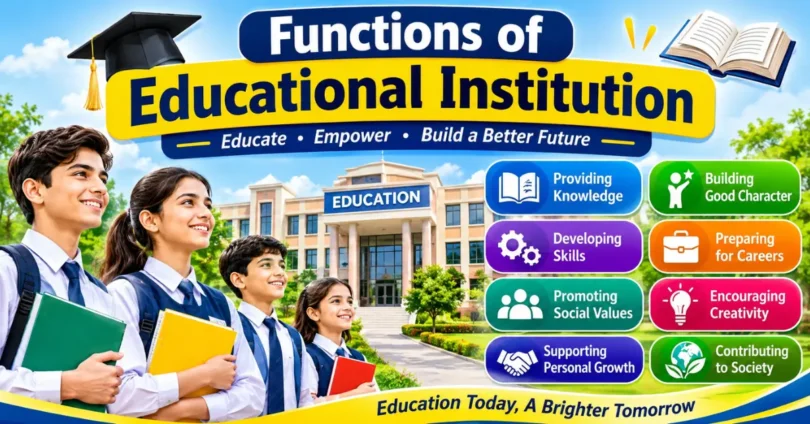
Educational institutions play an important role in shaping students’ lives and building a better society. The Functions of Educational Institution, Are not limited to teaching books and classroom lessons. They also help students gain knowledge, develop good character, improve social skills, and prepare for future careers. Schools, colleges, and universities teach important values such as honesty, respect, discipline, and teamwork. They also provide opportunities for students to discover their talents, improve their thinking, and learn useful life skills.We will explore the main functions of educational institutions and understand how they help individuals and society grow.
What Is an Educational Institution?
An educational institution is a place where people learn new things, gain knowledge, and develop useful skills. It provides organized learning through teachers, books, classroom activities, and practical lessons. Schools, colleges, universities, and training centers are common examples of educational institutions. These places help students understand different subjects, such as English, mathematics, science, and history. They also teach good manners, discipline, respect, and responsibility. An educational institution gives students the chance to improve their abilities, discover their interests, and prepare for future jobs.
Meaning and Purpose of an Educational Institution
An educational institution is a place where students gain knowledge, learn useful skills, and prepare for a better future. Its main purposes include:
- Providing Education: Teaching students important subjects like English, mathematics, and science.
- Building Good Character: Developing honesty, respect, kindness, and discipline.
- Improving Skills: Helping students improve communication, creativity, and problem-solving abilities.
- Preparing for Careers: Giving students knowledge and skills for future jobs.
- Promoting Social Values: Teaching teamwork, cooperation, and responsibility.
- Supporting Personal Growth: Building confidence and helping students discover their talents.
Educational institutions help students become knowledgeable, skilled, confident, and responsible members of society.
Major Functions of Educational Institution
Educational institutions perform several important functions to help students learn, develop skills, and build a better future.
- Providing Knowledge: Teaching basic subjects and useful information.
- Building Good Character: Developing honesty, respect, and kindness.
- Promoting Social Skills: Teaching teamwork and communication.
- Career Preparation: Helping students gain skills for future jobs.
- Encouraging Creativity: Supporting new ideas and problem-solving.
- Maintaining Discipline: Teaching punctuality and responsibility.
- Supporting Physical Health: Encouraging sports and exercise.
- Preserving Culture: Teaching history, traditions, and cultural values.
- Developing Citizenship: Preparing students to become responsible citizens.
- Ensuring Equal Education: Providing learning opportunities for everyone.
Educational institutions prepare students to become knowledgeable, skilled, and responsible members of society.
Role of Teachers in Educational Institutions
Teachers play an important role in educational institutions by guiding students and helping them learn new things.
- Providing Knowledge: Teaching different subjects in simple ways.
- Guiding Students: Helping students understand difficult lessons.
- Building Confidence: Encouraging students to believe in themselves.
- Teaching Good Values: Promoting honesty, respect, and kindness.
- Improving Skills: Developing communication and problem-solving abilities.
- Maintaining Discipline: Helping students follow rules and manage their time.
- Supporting Personal Growth: Identifying students’ talents and strengths.
Teachers guide students toward success and help them become educated, confident, and responsible individuals.
Different Types of Educational Institutions
Educational institutions come in different forms, and each type provides learning opportunities for students at different stages of life.
- Primary Schools
- Secondary Schools
- Colleges
- Universities
- Technical Institutions
- Vocational Training Centers
- Online Educational Institutions
Different educational institutions help people gain knowledge and skills according to their age, interests, and career goals.
Importance of Educational Institutions in Society
Educational institutions play an important role in improving society and creating better opportunities for people.
- Reducing Illiteracy: Helping more people learn to read and write.
- Creating Job Opportunities: Providing knowledge and skills for employment.
- Reducing Poverty: Helping people find better ways to earn money.
- Promoting Equality: Giving everyone a chance to receive education.
- Building Peace: Teaching respect, kindness, and cooperation.
- Supporting Economic Growth: Preparing skilled people for different industries.
- Creating Responsible Citizens: Teaching people their rights and duties.
Educational institutions build a stronger, more educated, peaceful, and successful society.
Challenges Faced by Educational Institutions
Educational institutions face several problems that can affect the quality of education and student learning.
- Lack of Qualified Teachers: Some schools do not have enough trained teachers.
- Limited Resources: Many institutions lack books, computers, and learning materials.
- High Education Costs: Expensive fees make education difficult for poor families.
- Poor Facilities: Some schools have unsafe buildings and crowded classrooms.
- Technology Problems: Limited access to computers and the internet affects modern learning.
- Unequal Opportunities: Some children cannot access quality education.
Solving these challenges can help educational institutions provide better learning opportunities for every student.
Core Functions of Educational Institution
Educational institutions perform several core functions to support students’ learning and personal development.
- Knowledge Development: Providing education in different subjects.
- Character Building: Teaching honesty, respect, and kindness.
- Social Development: Improving teamwork and communication skills.
- Career Preparation: Preparing students for future jobs and professions.
- Moral Education: Teaching students the difference between right and wrong.
- Physical Development: Encouraging sports and healthy activities.
- Creative Thinking: Helping students develop new ideas and solve problems.
- Cultural Awareness: Teaching traditions, history, and social values.
Educational institutions prepare students for successful lives by developing their knowledge, skills, and character.
Ways to Improve Educational Institutions
Educational institutions can become better by following simple steps that improve teaching and learning.
- Hire Qualified Teachers: Employ skilled and trained teachers.
- Improve Facilities: Provide clean classrooms, libraries, and laboratories.
- Use Modern Technology: Introduce computers and digital learning tools.
- Update Learning Materials: Provide useful books and study resources.
- Train Teachers: Arrange regular training programs.
- Ensure Student Safety: Create a safe and friendly learning environment.
- Encourage Practical Learning: Include projects, experiments, and activities.
- Support All Students: Provide equal learning opportunities.
These improvements help educational institutions provide better education and prepare students for a successful future.
How Educational Institutions Can Improve Their Performance
Educational institutions can improve their performance by providing better learning facilities and supporting both teachers and students.
- Hire Qualified Teachers: Employ skilled and experienced teachers.
- Improve Classrooms: Provide clean, safe, and comfortable learning spaces.
- Use Modern Technology: Introduce computers and digital learning tools.
- Update Study Materials: Provide new books and useful learning resources.
- Train Teachers: Arrange regular training programs to improve teaching skills.
- Encourage Practical Learning: Include projects, experiments, and classroom activities.
- Support Students: Give extra help to students who face learning difficulties.
- Involve Parents: Build strong communication between parents and teachers.
Better facilities, skilled teachers, and modern teaching methods can make educational institutions more successful.
Common FAQs about Functions of Educational Institution
Here are some FAQs of Functions of Educational Institution:
What is the main responsibility of an educational institution?
The main responsibility is to provide quality education and create an environment where students can learn, grow, and achieve their goals.
How do educational institutions help students make decisions?
They encourage students to think carefully, compare different choices, and understand the results of their decisions.
Why are libraries important in educational institutions?
Libraries give students access to books, newspapers, research materials, and other resources that support independent learning.
How do educational institutions support talented students?
They provide opportunities through competitions, special projects, scholarships, and talent-based activities.
What is the role of examinations in educational institutions?
Examinations help teachers measure students’ understanding, identify learning gaps, and check their academic progress.
How do educational institutions prepare students for real-life challenges?
They use practical activities, group projects, problem-solving tasks, and real-world examples to prepare students for everyday situations.
Why is student feedback important in educational institutions?
Student feedback helps teachers understand learning problems and improve lessons, classroom activities, and teaching methods.
How do educational institutions promote environmental awareness?
They teach students about protecting nature, saving water, reducing waste, planting trees, and keeping their surroundings clean.
Conclusion
Educational institutions play an important role in building a better future for individuals and society. The functions of educational institution go beyond providing classroom education. They help students gain knowledge, develop useful skills, improve their abilities, and understand their responsibilities. They also prepare young people to face real-life challenges and achieve their future goals. With good teachers, proper learning facilities, and supportive environments, educational institutions can make a positive difference in people’s lives.