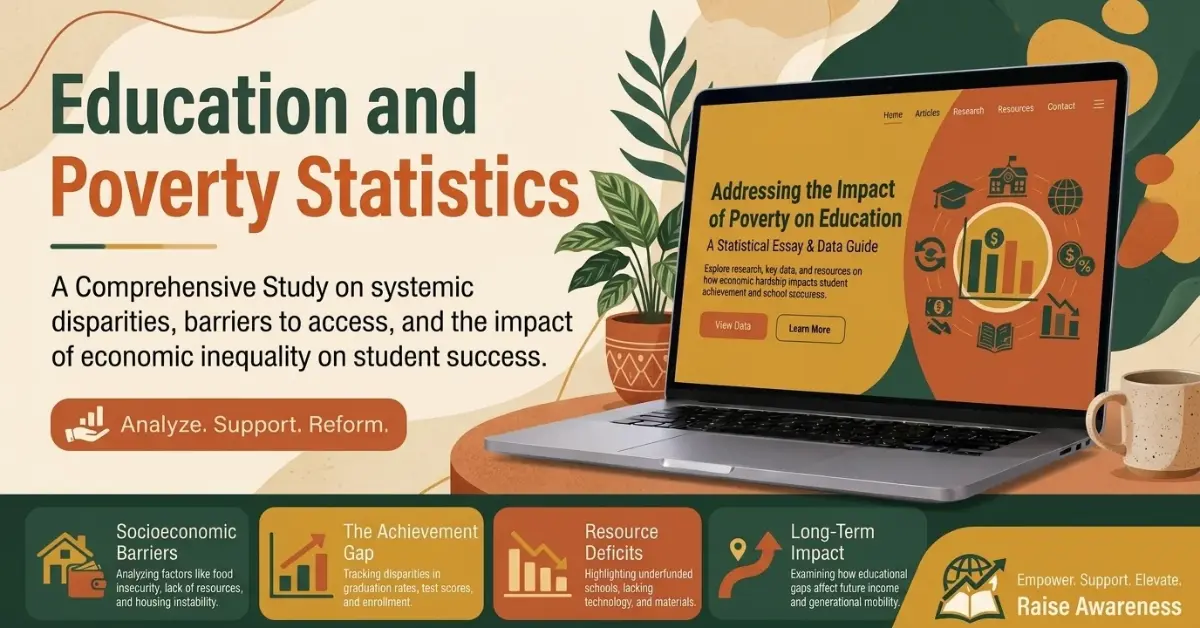
Education and Poverty Statistics, Help us understand how money problems affect children’s access to school and learning. Many children around the world cannot get a good education because their families cannot afford school fees, books, uniforms, or transport. Poverty can also force children to work instead of attending classes. Education gives people the knowledge and skills they need to find better jobs and improve their lives. By studying education and poverty statistics, we can understand these challenges and find ways to help more children receive a quality education.
What the Latest Education and Poverty Statistics Reveal
The latest education and poverty statistics show that millions of children around the world still face problems getting an education. According to UNESCO, about 273 million children and young people were out of school in 2024. Poverty is one important reason because many families cannot afford books, school uniforms, transport, and other learning needs. Some children also leave school to help their parents earn money. These problems can limit their future job opportunities and make it harder for families to escape poverty. Better schools, free learning materials, school meals, and financial support can help more children attend classes and build a better future.
Global Statistics on Poverty and Education
Global statistics show how poverty affects children’s access to education and their chances of building a better future.
- Out of school children: UNESCO estimated that 273 million children and young people were out of school worldwide in 2024.
- Learning poverty: Many children in low- and middle-income countries struggle to read and understand simple text by age 10.
- Family income: Poor families may find it hard to pay for books, uniforms, transport, and other school needs.
- Gender gap: In some regions, girls face extra barriers to education because of poverty and social pressure.
- School quality: Many disadvantaged communities lack trained teachers, safe classrooms, and learning materials.
- Long term effects: Limited education can reduce job opportunities and make it harder for families to escape poverty.
These statistics show why affordable schools and equal learning opportunities are important for reducing poverty worldwide.
How Poverty Shapes a Child’s Educational Journey
Poverty can make it difficult for children to attend school regularly, learn well, and complete their education.
- School Expenses: Poor families may struggle to afford books, uniforms, and other school supplies.
- Hunger and Health: Children who do not get enough healthy food may find it hard to focus in class.
- Child Labor: Some children work to help their families instead of going to school.
- Transport Problems: Long distances and travel costs can prevent children from attending classes.
- Limited Learning Resources: A lack of computers, internet access, and quiet study spaces can affect learning.
- Family Responsibilities: Some children miss lessons because they must care for siblings or help at home.
Poverty creates many barriers to education, but family support and affordable schooling can help children build a brighter future.
How Poverty Affects Access to Education
Poverty makes it harder for many children to attend school and get a good education.
- School Costs: Poor families may not afford books, uniforms, and school supplies.
- Child Labor: Some children work to help their families earn money instead of going to school.
- Long Distances: Children in poor areas may live far from schools and lack transport.
- Hunger and Health: Poor nutrition and health problems can make learning difficult.
- Lack of Schools: Some communities do not have enough schools, classrooms, or trained teachers.
- Family Problems: Parents facing financial stress may struggle to support their children’s education.
Reducing poverty and providing affordable education can help more children attend school and build a better future.
Why Poor Children Leave School Early
Poor children often leave school early because their families face money problems and cannot afford basic education needs. Some children must work to help their parents pay for food, rent, and other daily expenses. Others leave school because they cannot buy books, uniforms, or transport. In some areas, schools are far from home, and children may not have a safe way to travel. A lack of trained teachers and proper classrooms can also make learning difficult. These problems can reduce children’s chances of getting good jobs in the future.
The Main Reasons Children Miss Out on Education
Many children cannot attend school because they face financial, social, and family problems.
- Poverty: Families may not afford school fees, books, uniforms, or transport.
- Child Labor: Some children work to help their families earn money.
- Lack of Schools: Children in rural areas may live far away from the nearest school.
- Family Responsibilities: Some children must care for younger siblings or help with household work.
- Poor School Facilities: A lack of teachers, classrooms, and learning materials can stop children from attending school.
- Gender Inequality: In some communities, girls face extra barriers to getting an education.
Removing these barriers can help more children attend school and build a brighter future.
The Education Gap Between Rich and Poor Children
Rich and poor children often have different learning opportunities because their families have different levels of money and resources.
- School Resources: Wealthy children may attend schools with better classrooms, books, and learning tools.
- Private Tuition: Rich families can often afford extra lessons, while poor families may not.
- Technology Access: Some children have computers and fast internet, while others lack these tools.
- Nutrition and Health: Children from poor families may face hunger and health problems that make learning harder.
- Learning Opportunities: Wealthier children may have more chances to join educational activities and skill-building programs.
- Future Careers: Unequal education opportunities can affect children’s skills and future job choices.
Every child deserves quality education, regardless of family income, to build a fairer and brighter future.
Can Better Education Help Break the Cycle of Poverty?
Yes, better education can help families escape poverty by giving people useful skills and more opportunities to improve their lives.
- Better Job Opportunities: Education helps people qualify for more jobs and earn a stable income.
- Useful Life Skills: Reading, writing, and math help people make better daily decisions.
- Higher Earning Potential: Further education and training may help people find better-paying work.
- Improved Health: Education helps people understand health, hygiene, and good nutrition.
- Support for Children: Educated parents can better support their children’s learning and school progress.
- Practical Training: Vocational courses teach skills that can help people find work or start small businesses.
Quality education can reduce poverty over time by improving skills, job opportunities, and family well being.
Common FAQs about Education and Poverty Statistics
Here are some FAQs of Education and Poverty Statistics:
How do researchers collect education and poverty statistics?
Researchers collect information through surveys, school records, household interviews, and government reports. They use this information to understand education access and family living conditions.
What is the relationship between literacy rates and poverty?
Literacy rates show how many people can read and write. Low literacy can make it harder for people to access information, complete forms, and qualify for certain jobs.
How does rural poverty affect school attendance?
Children in rural areas may live far from schools or have limited access to transport, electricity, and the internet. These barriers can make regular attendance difficult.
Why are education statistics important for policymakers?
Education statistics help policymakers decide where to build schools, train teachers, and provide learning resources. They also help measure whether education programs are working.
What is the difference between school enrollment and school completion?
School enrollment measures how many children are registered in school, while school completion measures how many finish a particular level of education.
How can digital technology improve education in poor communities?
Digital technology can provide access to online lessons, educational videos, and digital books. However, students also need devices, electricity, internet access, and support to use these tools.
How does parental education influence children’s school performance?
Parents who have strong reading and learning skills may find it easier to help with homework, communicate with teachers, and create good study habits at home.
How can education statistics help measure progress against poverty?
Researchers can compare education access, learning outcomes, and employment data over time. These comparisons help show whether people are gaining better opportunities, although education alone does not explain every change in poverty.
Conclusion
Education and poverty statistics show why access to quality education is important for children, families, and communities. These statistics help us understand learning gaps and the challenges that prevent children from completing school. Governments, schools, and communities can work together to make education more affordable and accessible. By improving learning opportunities and supporting disadvantaged families, we can help more people build a better future. Every child deserves the chance to learn, grow, and reach their full potential.