Thailand is a beautiful country with a rich culture, friendly people, and many special traditions. Thai Customs, Play an important role in daily life, from greeting others and sharing meals to visiting temples and celebrating festivals. These traditions teach people to show respect, care for their families, and treat others politely. Whether you plan to visit Thailand, study its culture, or learn about its way of life, understanding Thai customs can help you connect with local people and avoid common mistakes. You will learn about the most important Thai traditions, social manners, and cultural rules in simple English.
Understand the Meaning of Thai Customs
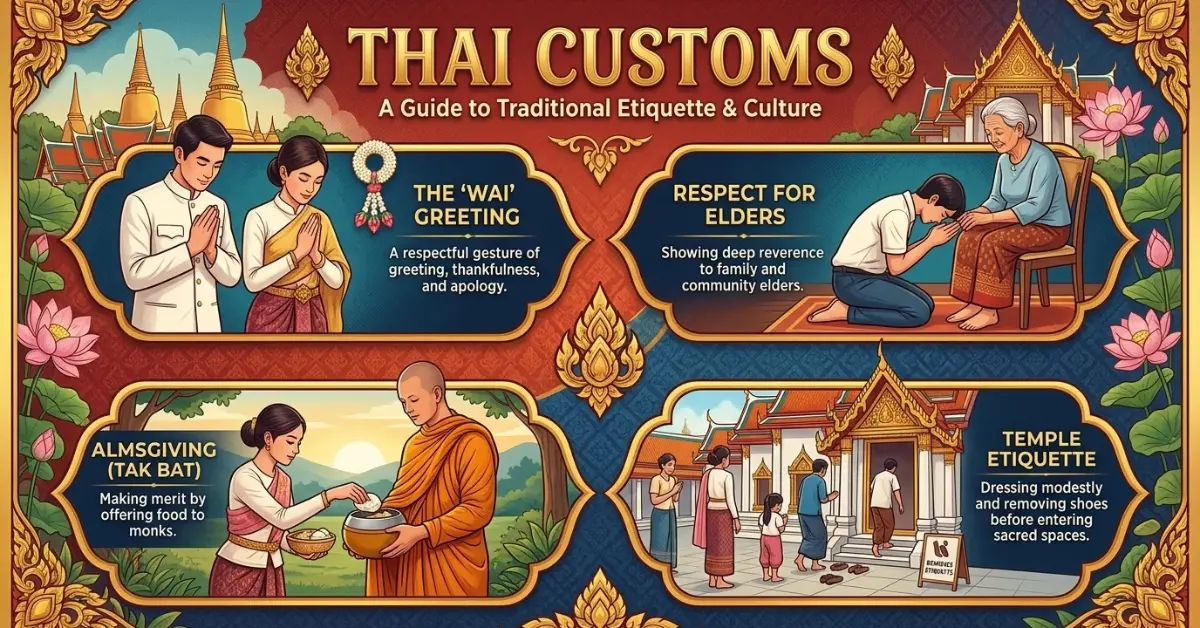
Thai customs are the traditions, habits, and social rules that guide how people live and treat others in Thailand. They include greeting people politely, respecting older family members, removing shoes before entering certain homes, and following proper manners at temples. These customs are shaped by Thai history, family values, religion, and local traditions. For example, the traditional wai greeting shows respect by placing the hands together and slightly bowing the head. Understanding Thai customs helps visitors communicate politely, avoid common mistakes, and learn more about the daily lives of Thai people.
Learn How Thai People Greet Each Other
Thai people use polite words and friendly gestures to greet others and show respect. These greetings are an important part of Thai customs.
- The Wai Greeting: People place their palms together and bow their heads slightly to show respect.
- Say Sawasdee: The word “Sawasdee” means hello and is used when meeting people.
- Use Polite Words: Men commonly add “khrap,” while women commonly add “kha” to make their words polite.
- Respect Older People: Younger people often show respect when greeting elders.
- Smile and Be Friendly: A gentle smile helps create a warm and welcoming feeling.
Learning these simple greetings helps visitors follow Thai customs and build friendly relationships with local people.
Use Thai Customs in Real-Life Situations
Following Thai customs in daily life helps you show respect, make friends, and enjoy your time in Thailand.
- Greeting People: Use “Sawasdee” to say hello and offer a polite wai when appropriate.
- Visiting Homes: Remove your shoes before entering a home if the host expects you to do so.
- Eating with Others: Share food politely and take reasonable portions from shared dishes.
- Visiting Temples: Wear modest clothes, speak quietly, and follow local rules.
- Respecting Elders: Speak politely and listen carefully when older people are talking.
- Giving Gifts: Offer gifts politely and show thanks when someone gives you something.
- Avoiding Mistakes: If you do not understand a custom, observe others or ask a polite question.
By using Thai customs in real-life situations, you can build friendly relationships and show appreciation for Thai culture.
What Are Thai Customs and Why Do They Matter?
Thai customs are the traditions, manners, and social rules that guide people’s daily lives in Thailand. They include greeting others politely, respecting elders, following temple rules, sharing meals, and celebrating special festivals. These customs are important because they help people show kindness, respect, and care for their families and communities. For example, the traditional wai greeting is a common way to show respect when meeting someone.
Thai Customs for Greetings and Introductions
Thai greetings are an important part of daily life and help people show kindness and respect when meeting others.
- Use “Sawasdee”: This common Thai word means hello and is used in many situations.
- Learn the Wai Greeting: Place your palms together and bow your head slightly when appropriate.
- Add Polite Words: Men often use khrap, while women often use kha to sound polite.
- Respect Older People: Show respect when greeting elders and people in senior positions.
- Smile Naturally: A friendly smile can make introductions warm and welcoming.
- Stay Polite: Speak calmly and use respectful language when meeting someone for the first time.
Following these Thai customs can help you make a good first impression and build friendly relationships with local people.
Thai Customs in Temples and Religious Places
Thai temples are important places for prayer and peace, so visitors should follow local customs and show respect.
- Wear Modest Clothes: Cover your shoulders and knees when visiting temples.
- Remove Your Shoes: Take off your shoes before entering temple buildings where required.
- Speak Quietly: Keep your voice low to respect people who are praying.
- Respect Buddha Images: Never climb on or behave disrespectfully around Buddha statues.
- Follow Monk Etiquette: Show respect to Buddhist monks and follow temple guidance.
- Ask Before Taking Photos: Check whether photography is allowed in certain areas.
Following these customs helps you respect Thai religious traditions and enjoy a peaceful temple visit.
Thai Customs for Food and Dining
Thai dining customs help people enjoy meals together while showing respect and good manners.
- Share Food: Thai meals often include several dishes shared by everyone at the table.
- Use a Spoon and Fork: A spoon is commonly used for eating, while a fork helps move food onto it.
- Take Small Portions: Take a little food at a time and avoid wasting it.
- Wait Politely: Follow the host’s lead when starting a meal.
- Say Thank You: Show appreciation to the person who prepared or shared the food.
Following Thai dining customs helps you enjoy local food and have a pleasant meal with others.
Thai Customs That Make Meals Special
Thai food customs bring people together and teach them to enjoy meals with kindness and respect.
- Share Food: Thai meals often include several dishes shared by everyone at the table.
- Use Spoons and Forks: A spoon is commonly used for eating, while a fork helps move food onto it.
- Wait Politely: Allow everyone to settle before starting the meal, especially during formal gatherings.
- Take Small Portions: Take a reasonable amount and enjoy different dishes without wasting food.
- Show Appreciation: Thank the person who prepared or shared the meal.
- Respect Others: Eat politely and avoid making others feel uncomfortable about their food choices.
Following these Thai customs makes meals more enjoyable and helps build strong relationships with family and friends.
Thai Customs Connected to Religion and Spiritual Beliefs
Religion and spiritual beliefs play an important role in Thai customs and everyday life.
- Buddhism: Buddhism influences many Thai traditions, festivals, and daily activities.
- Temple Visits: People remove their shoes and dress modestly when entering temples.
- Respect for Monks: Thai people show respect to Buddhist monks through polite behavior.
- Buddha Images: Buddha images are treated with care and respect.
- Making Offerings: Some people offer food, flowers, or candles at temples.
- Merit Making: Many Thai people give donations or help others as an act of kindness.
Understanding these religious customs helps visitors respect Thai beliefs and learn more about the country’s culture.
Common FAQs about Thai Customs
Here are some FAQs of Thai Customs:
What Is the Role of the King in Thai Customs?
Thailand has a strong tradition of respect for the monarchy. People should speak respectfully about the royal family and follow local laws and public rules.
Are There Special Customs for Thai Weddings?
Yes, traditional Thai weddings may include family blessings, religious ceremonies, and the Rod Nam Sang water-pouring ritual to wish the couple a happy life.
What Is the Meaning of Taking Off Shoes in Thailand?
Removing shoes helps keep homes and certain indoor places clean. Visitors should check whether shoes are expected to be removed before entering.
How Do Thai People Celebrate a Baby’s Birth?
Families may follow Buddhist blessing practices or hold a small family gathering to welcome a baby. Customs can differ by family and region.
Is Bargaining Part of Thai Shopping Customs?
Polite bargaining may be accepted in some street markets, but it is less common in shopping malls and stores with fixed prices. Always bargain kindly.
What Should Visitors Know About Thai Gift-Giving Customs?
Small gifts are often appreciated when visiting someone’s home. Present a gift politely, and avoid choosing items that may conflict with the receiver’s beliefs.
Are Thai Customs the Same in Every Part of Thailand?
No. Customs can vary between northern, northeastern, central, and southern Thailand. Local languages, food, festivals, and community traditions make each region special.
How Can Visitors Learn Thai Customs Before Traveling?
Visitors can read reliable travel guides, learn a few polite Thai phrases, research local festivals, and ask local people respectful questions when they are unsure.
Conclusion
Thai customs reflect the country’s rich culture, traditions, and values of respect and kindness. From family gatherings and traditional festivals to social manners and religious practices, these customs help people understand everyday life in Thailand. Learning about Thai customs allows visitors to communicate politely, respect local traditions, and avoid common cultural mistakes. Whether you are planning a trip or exploring Thai culture from home, understanding these traditions can make your experience more meaningful.