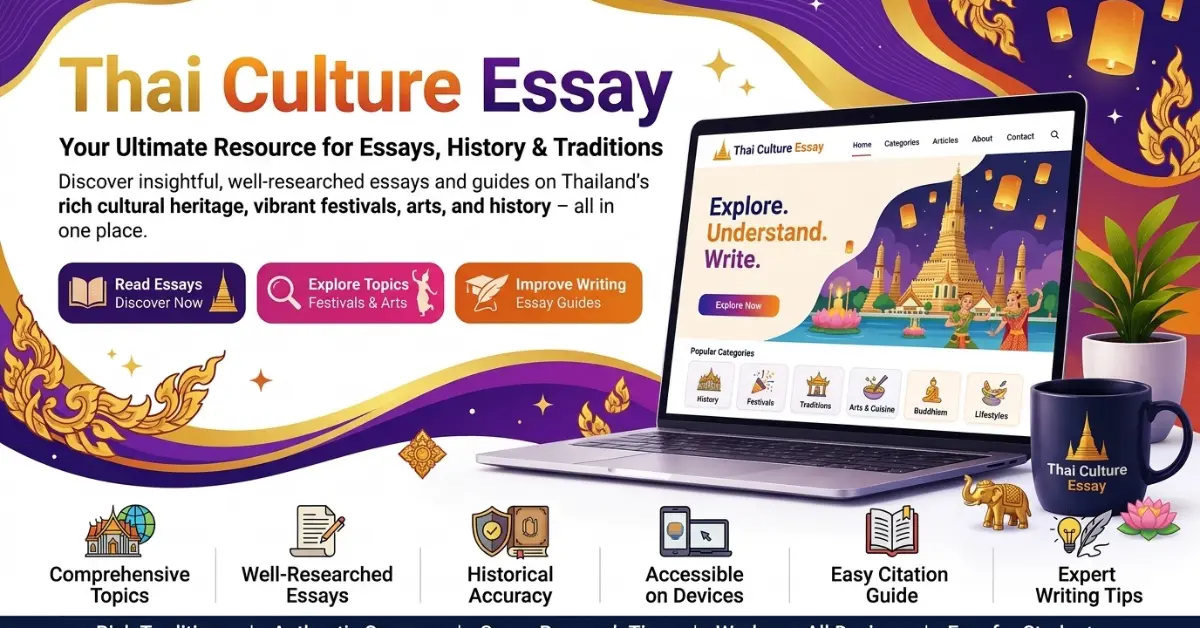
Thai culture is a beautiful mix of old traditions, religious beliefs, delicious food, and friendly customs. A Thai Culture Essay, Helps students understand how people in Thailand live, celebrate festivals, respect elders, and follow their cultural values. Thailand is famous for its colorful festivals, beautiful temples, traditional clothing, and tasty dishes. Buddhism also plays an important role in the daily lives of many Thai people. From the famous Songkran festival to the gentle wai greeting, Thai culture teaches the importance of kindness, respect, and harmony. Learning about these traditions helps us understand Thailand’s rich history and appreciate the beauty of different cultures around the world.
The History Behind Thai Culture
Thai culture has a long and rich history that has developed over many centuries. Early Thai communities built their own traditions, languages, beliefs, and ways of life. Ancient kingdoms, such as Sukhothai and Ayutthaya, played an important role in shaping Thailand’s history. Buddhism also influenced Thai art, architecture, festivals, and daily customs. Thailand’s location in Southeast Asia allowed its people to share ideas, food, and traditions with nearby countries. These influences helped create the unique culture that Thailand is known for today.
Religion and Spiritual Beliefs
Religion is an important part of Thai culture, shaping people’s values, traditions, and daily lives.
- Buddhism: The main religion in Thailand, teaching peace, kindness, and respect.
- Temples: Places for prayer, learning, and religious activities.
- Respect for Monks: People often offer food and support to Buddhist monks.
- Religious Festivals: Celebrations such as Visakha Bucha Day honor Buddhist beliefs.
- Other Religions: Muslims, Christians, Hindus, and other religious groups also live in Thailand.
These beliefs help promote kindness, respect, and harmony in Thai society.
Thai Values and Social Behavior
Thai culture teaches people to respect others, behave politely, and live peacefully in their communities.
- Respect for Elders: Older people are treated with care and respect.
- Politeness: People often use gentle words and friendly manners.
- Kindness: Helping others is an important social value.
- Social Harmony: Many Thai people try to avoid arguments and keep peaceful relationships.
- The Wai Greeting: People press their palms together and bow their heads to greet others or show respect.
- Self Control: Staying calm and managing emotions are valued in many social situations.
These values help build strong relationships and promote kindness, respect, and harmony in Thai society.
Family Life and Respect for Elders
Family is an important part of Thai culture, where love, respect, and helping one another are valued.
- Strong Family Bonds: Family members support each other during happy and difficult times.
- Respect for Elders: Children are taught to respect older people and listen to their advice.
- Caring for Parents: Many families believe in caring for parents and grandparents as they grow older.
- Teaching Good Manners: Parents teach children to speak politely and behave kindly.
- Family Gatherings: Relatives often come together during festivals, special occasions, and family celebrations.
These family values help Thai people build strong relationships and create a caring and respectful society.
Traditional Clothing and National Dress
Traditional Thai clothing reflects the country’s history, beauty, and cultural values. People often wear these clothes during festivals, weddings, and special events.
- Chut Thai: Traditional Thai clothing is commonly known as Chut Thai.
- Silk Fabric: Thai silk is famous for its beautiful colors and fine quality.
- Formal Clothing: Traditional outfits are often worn at official ceremonies and cultural celebrations.
- Women’s Clothing: Women may wear elegant silk dresses with matching shawls.
- Men’s Clothing: Traditional men’s outfits may include silk shirts and formal trousers.
- Special Occasions: People wear traditional clothing during weddings, festivals, and important national events.
Traditional Thai clothing keeps the country’s cultural heritage alive and shows its beauty to the world.
Why Thai Culture Matters Today
Thai culture matters today because it helps people understand their history, traditions, and values. It teaches important lessons about kindness, respect, family, and helping others. Traditional festivals, clothing, food, and art connect younger generations with their cultural roots. Learning about Thai culture also helps people from other countries understand and respect different ways of life. In the modern world, protecting cultural traditions is important because it keeps a country’s identity alive. By sharing and preserving their heritage, Thai people can pass their beautiful customs and values on to future generations.
Thai Food and Dining Traditions
Thai food is famous for its fresh ingredients, rich flavors, and colorful dishes. Food is also an important part of Thai family and social life.
- Rice: Rice is a main food in many Thai meals.
- Popular Dishes: Pad Thai, Tom Yum soup, and green curry are well-known Thai foods.
- Fresh Ingredients: Thai cooking often uses herbs, vegetables, spices, and coconut milk.
- Balanced Flavors: Many Thai dishes mix sweet, sour, salty, and spicy tastes.
- Sharing Meals: Families and friends often share several dishes at the same meal.
- Dining Manners: People commonly use a spoon and fork when eating Thai meals.
Thai food and dining traditions bring people together and help preserve the country’s rich cultural identity.
Thai Culture in Modern Society
Thai culture continues to play an important role in modern society, even as people’s lifestyles change. Today, many Thai people use modern technology, attend schools and universities, and work in busy cities while keeping their traditional values. Festivals such as Songkran and Loy Krathong remain popular and bring families and communities together. Traditional Thai food, clothing, music, and art are also shared with people around the world. Young people learn about their heritage through family activities, cultural events, and education. Although modern life brings new ideas and habits, Thailand continues to protect its cultural traditions and pass them on to future generations.
Festivals and Special Celebrations
Thailand celebrates many colorful festivals that show its traditions, beliefs, and community spirit.
- Songkran Festival: Thai New Year is celebrated in April with water activities, family visits, and respect for elders.
- Loy Krathong: People float small decorated baskets on water to mark this beautiful festival.
- Yi Peng Festival: In northern Thailand, people celebrate by releasing glowing lanterns into the night sky.
- Chinese New Year: Thai communities with Chinese roots celebrate with family gatherings, decorations, and special foods.
- Buddhist Festivals: Events such as Visakha Bucha Day include temple visits and religious activities.
These celebrations help preserve Thai traditions and bring families and communities together.
Common FAQs about Thai Culture Essay
Here are some FAQs of Thai Culture Essay:
What makes Thai culture unique?
Thai culture is unique because it combines local traditions, Buddhist influences, traditional arts, and customs.
What is the role of the Thai monarchy in culture?
The Thai monarchy has an important place in the country’s history and national identity. Royal ceremonies and traditions remain meaningful in Thai society.
What is the traditional Thai greeting called?
The traditional Thai greeting is called the wai. People place their palms together and slightly bow their heads to greet others or show respect.
Why is the Thai language important to cultural identity?
The Thai language helps people share stories, express ideas, preserve local knowledge, and pass cultural traditions from one generation to another.
What are some famous Thai handicrafts?
Thai handicrafts include pottery, wood carving, silk weaving, basketry, and decorative work made by skilled local artists.
How do Thai people celebrate weddings?
Traditional Thai weddings may include blessings from elders, Buddhist ceremonies, and the rod nam sang water-pouring ritual, which symbolizes blessings for the couple.
What are the main differences between rural and urban Thai lifestyles?
Rural communities may have stronger connections to farming and local traditions, while urban areas often have faster lifestyles and more modern work opportunities. However, both preserve cultural practices in different ways.
How can students learn more about Thai culture?
Students can learn through books, documentaries, cultural museums, traditional performances, and reliable educational websites. They can also explore Thai stories, crafts, and local customs to understand the culture better.
Conclusion
Thai culture is a rich part of Thailand’s identity, shaped by its history, values, arts, and daily life. It helps people understand the importance of respecting others, protecting traditions, and learning from the past. From traditional clothing and local crafts to family customs and cultural celebrations, each part of Thai heritage has its own meaning. Learning about Thai culture also teaches students to appreciate the differences between people around the world.