The Education Cycle of Poverty, Is a serious problem that affects children, families, and communities around the world. When parents have little money, they may struggle to provide their children with school fees, books, uniforms, and other basic needs. As a result, some children cannot complete their education or learn the skills they need to find good jobs. This can lead to low income and make life difficult for the next generation. However, quality education, family support, and equal learning opportunities can help children build a better future and break the cycle of poverty.
What Is the Education Cycle of Poverty?
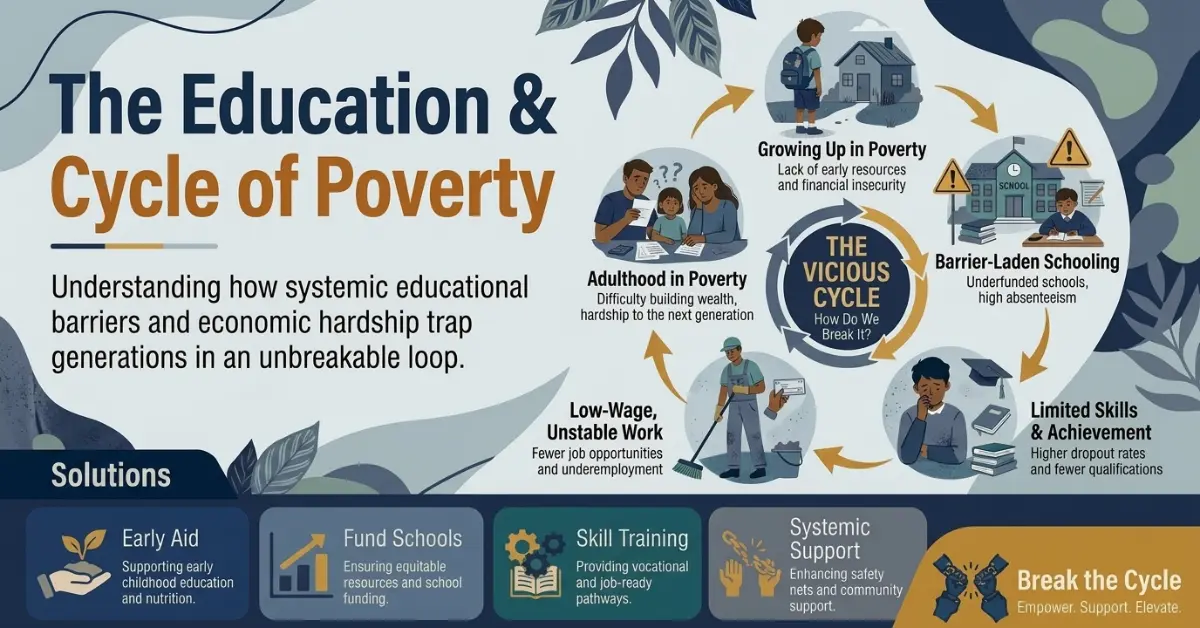
The education cycle of poverty is a situation in which poverty makes it difficult for children to get a good education, and a lack of education makes it harder for them to find well-paid jobs in the future. When families have little money, they may not be able to afford school supplies, transport, books, or other learning needs. Some children may leave school early to help their families earn money. Without enough education and skills, they may struggle to find better jobs and improve their living conditions. As a result, their children may face the same problems.
How the Education Cycle of Poverty Works
The education cycle of poverty works when low income limits education and poor education reduces future job opportunities.
- Low Family Income: Parents struggle to pay for school needs.
- Limited Education: Children may miss school or leave early.
- Fewer Skills: Students may not gain the skills needed for good jobs.
- Low Paying Jobs: Limited education can lead to fewer job choices.
- Continued Poverty: Families may struggle to earn enough money.
- Next Generation: Their children may face the same problems.
Better education and family support can help break the cycle of poverty and create a brighter future.
Main Causes of the Education Cycle of Poverty
Several factors make it difficult for poor families to provide their children with a good education.
- Low Family Income: Parents cannot afford school fees, books, and uniforms.
- Lack of Schools: Some children live far from schools.
- Poor School Facilities: Schools may lack trained teachers and learning materials.
- Child Labor: Some children work to help their families earn money.
- Poor Nutrition: Hunger can make it harder for children to learn.
- Limited Parental Education: Parents may struggle to support their children’s studies.
These problems can limit children’s education and keep families trapped in poverty for generations.
How Poverty and Education Affect Each Other
Poverty and education are closely connected because each can affect a person’s future opportunities.
- Limited School Access: Poor families may struggle to afford school expenses.
- Poor Learning: Hunger, stress, and a lack of books can make studying difficult.
- Fewer Job Options: Limited education can reduce chances of finding skilled work.
- Low Income: Fewer job opportunities can keep families poor.
- Future Generations: Children may face the same education problems as their parents.
Access to quality education can help people gain skills, find better jobs, and reduce poverty over time.
Effects of the Education Cycle of Poverty on Society
The education cycle of poverty affects not only families but also the growth and progress of society.
- Unemployment: People with limited education may struggle to find jobs.
- Low Living Standards: Families may lack money for food, housing, and healthcare.
- Income Inequality: The gap between rich and poor families may increase.
- Limited Skills: Communities may have fewer trained workers.
- Slow Economic Growth: A lack of skilled workers can affect development.
- Child Labor: Some children may work instead of attending school.
Improving access to quality education can help reduce poverty and build a stronger society.
How Education Can Break the Cycle of Poverty
Education gives children and adults the knowledge and skills they need to build a better future.
- Better Job Opportunities: Education helps people qualify for more jobs.
- Higher Income: Skilled workers may earn more money.
- Free Schooling: Free education helps poor children continue their studies.
- Practical Skills: Training prepares students for useful work.
- Family Support: Educated parents can better support their children’s learning.
- Equal Opportunities: Scholarships help students from low-income families.
Quality education can open new doors, reduce poverty, and help future generations live better lives.
Breaking the Education Cycle of Poverty Through Education
Education helps people gain knowledge, develop skills, and find better ways to improve their lives.
- Affordable Education: Low-cost schooling helps poor children continue learning.
- Scholarships: Financial support helps students pay for school needs.
- Digital Learning: Computers and the internet provide access to more learning resources.
- Job Skills: Practical training prepares students for better work opportunities.
- Adult Education: Adults can learn new skills to improve their income.
- Community Support: Families and local groups can help children stay in school.
Equal access to quality education can break the cycle of poverty and create better opportunities for future generations.
Real-Life Example of Breaking the Poverty Cycle
A simple example shows how education can help a child from a poor family build a better future.
- Family Struggles: Ali belongs to a low-income family that cannot afford all his school needs.
- School Support: His school provides free books, meals, and learning materials.
- Hard Work: Ali studies regularly and develops useful skills.
- Higher Education: He completes his studies with help from a scholarship.
- Better Job: Ali finds a good job and starts earning a steady income.
- Family Improvement: He helps his family and supports his children’s education.
Ali is fictional story shows how education and financial support can create better opportunities and help break the poverty cycle.
Challenges in Breaking the Education Cycle of Poverty
Breaking the education cycle of poverty is difficult because many children face problems that limit their learning opportunities.
- School Costs: Poor families may struggle to pay for books, uniforms, and transport.
- Lack of Teachers: Some schools do not have enough trained teachers.
- Child Labor: Children may need to work instead of attending school.
- Poor Nutrition: Hunger can affect students’ health and concentration.
- Limited Technology: Some students lack computers and internet access.
- Family Responsibilities: Children may need to care for family members or help at home.
Solving these challenges requires affordable education, family support, and better school facilities for every child.
Role of Education in Reducing Poverty
Education helps people gain knowledge, learn useful skills, and improve their chances of earning a better income.
- Better Employment: Education helps people qualify for more job opportunities.
- Higher Earnings: Skilled workers may have a chance to earn more money.
- Improved Health: Education helps people make better health and nutrition choices.
- Financial Knowledge: Educated people can learn to manage money and save for the future.
- Equal Opportunities: Education gives children from poor families a chance to improve their lives.
- Community Growth: Educated people can contribute to the progress of their communities.
Quality education can reduce poverty over time by helping people build skills, find work, and create a more secure future.
Common FAQs about Education Cycle of Poverty
Here are some FAQs of Education Cycle of Poverty:
How does the education cycle of poverty affect a child’s dreams?
Poverty can make it harder for children to follow their dreams because they may lack school supplies, learning resources, or time to study. Support from teachers and family members can help them work toward their goals.
Can online learning help children living in poverty?
Yes, online learning can provide free lessons, videos, and educational materials. However, children need access to a device, internet connection, and a suitable place to learn.
Why do children in poor areas sometimes receive a lower-quality education?
Poor areas may have crowded classrooms, fewer learning materials, unsafe school buildings, and limited access to trained teachers. These problems can make learning more difficult.
How does education help women break the poverty cycle?
Education can help women develop skills, access more employment opportunities, understand their rights, and make informed decisions about their families and finances.
What is the importance of early childhood education in reducing poverty?
Early childhood education helps young children develop language, thinking, social, and problem-solving skills. These skills can prepare them for school and support their learning as they grow.
Can vocational training help people escape poverty without a university degree?
Yes, vocational training teaches practical skills such as plumbing, electrical work, cooking, and computer use. These skills can help people find employment or start small businesses.
How can school meals improve educational outcomes for poor children?
School meals help children receive important nutrients and may reduce hunger during lessons. This can support concentration, attendance, and participation in classroom activities.
How long does it take for education to reduce poverty in a community?
The results depend on education quality, job opportunities, and financial support. Some people may benefit within a few years, while lasting improvements across a community can take a generation or longer.
Conclusion
The education cycle of poverty is a serious problem that can affect families and communities for generations. When children have limited access to education, they may face fewer opportunities to build a better future. However, quality schooling, practical skills, financial support, and equal learning opportunities can help people improve their lives. Families, schools, and governments must work together to make education accessible to every child. By investing in education today, we can create a brighter future and help break the cycle of poverty for generations to come.