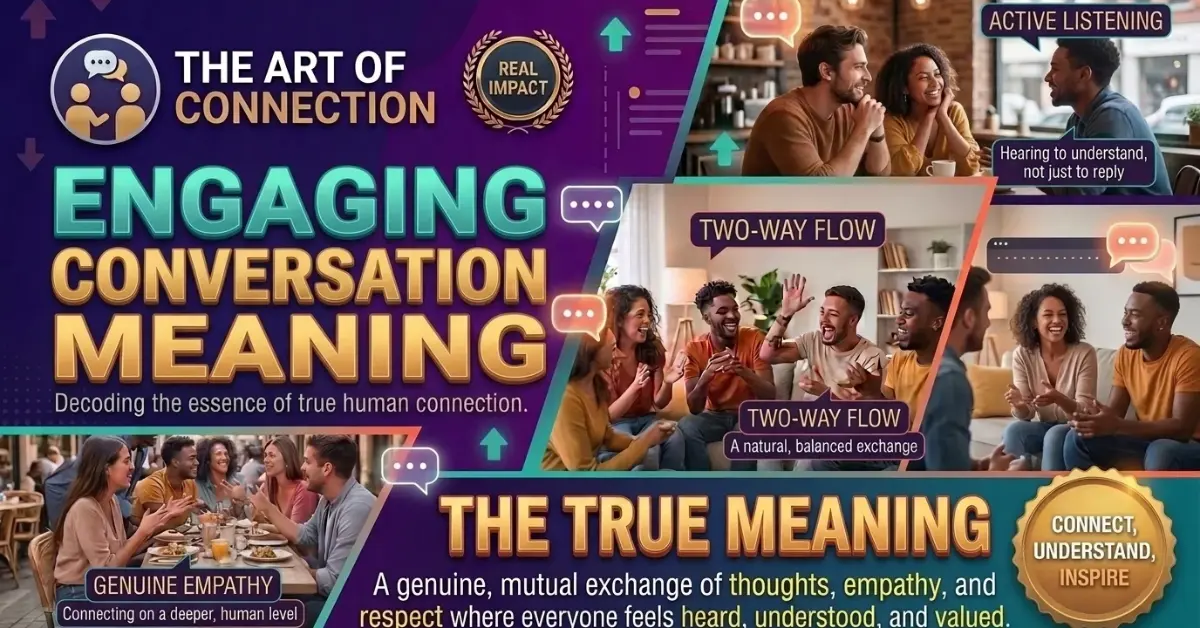
Engaging Conversation Meaning, Refers to a talk that keeps people interested, encourages them to share ideas, and helps them understand each other. It is more than just speaking because it also includes listening, asking questions, and giving thoughtful answers. An engaging conversation can happen between friends, family members, classmates, or even strangers. It makes people feel comfortable and valued while helping them build stronger connections. By learning how to communicate with interest and respect, anyone can make everyday conversations more enjoyable and meaningful.
What Does Engaging Conversation Mean?
The engaging conversation meaning is a way of talking that keeps people interested and encourages them to share their thoughts, feelings, and ideas. It involves more than speaking because people also listen carefully, respond naturally, and show interest in what others say. For example, when classmates discuss their favorite subjects and exchange ideas, they can enjoy a lively conversation. Engaging conversations help people learn from each other, express themselves clearly, and build better communication skills in everyday life.
How an Engaging Conversation Works Step by Step
An engaging conversation develops naturally when people listen, share ideas, and show interest in each other. Follow these simple steps:
- Start With a Friendly Greeting: Begin with a smile and a warm hello.
- Choose an Interesting Topic: Talk about something both people enjoy.
- Listen Carefully: Pay attention to the speaker without interrupting.
- Ask Simple Questions: Show interest by asking relevant questions.
- Share Your Thoughts: Give your opinions and experiences naturally.
- Respond With Interest: Answer in a way that keeps the discussion moving.
- Respect Different Opinions: Accept that people may have different views.
- End Politely: Close the conversation with kind words when it is time to leave.
Following these steps can make conversations more enjoyable, natural, and meaningful for everyone.
Different Types of Engaging Conversations
Engaging conversations can happen in many situations, depending on the people, topics, and purpose of the discussion.
- Friendly Conversations: Casual talks with friends about hobbies, daily life, and personal experiences.
- Educational Conversations: Discussions that help people learn new facts, share knowledge, and understand ideas.
- Emotional Conversations: Talks where people share their feelings, worries, and personal experiences.
- Professional Conversations: Workplace discussions about tasks, goals, and new ideas.
- Deep Conversations: Meaningful talks about life, dreams, values, and personal beliefs.
- Fun Conversations: Lighthearted chats that include jokes, funny stories, and enjoyable topics.
- Online Conversations: Engaging discussions through messages, video calls, and social media.
Each type of conversation helps people connect, exchange ideas, and understand one another in different ways.
The Core Idea Behind an Engaging Conversation
An engaging conversation is built on mutual interest, clear communication, and respect. Its main purpose is to help people connect and understand each other.
- Active Listening: Pay attention to what the other person says.
- Meaningful Questions: Ask questions that encourage detailed answers.
- Clear Communication: Share your thoughts in simple and understandable words.
- Mutual Interest: Choose topics that both people enjoy discussing.
- Respectful Responses: Accept different opinions without being rude.
- Natural Flow: Let the discussion move smoothly from one topic to another.
An engaging conversation becomes meaningful when people listen, share, and show genuine interest in each other.
The Role of Emotions in Everyday Conversations
Emotions help people understand each other and make everyday conversations more meaningful. They influence how we speak, listen, and respond to others.
- Showing Happiness: A friendly tone and smile make conversations more enjoyable.
- Building Trust: Sharing feelings honestly helps people feel closer.
- Understanding Others: Recognizing emotions helps us respond with care.
- Showing Empathy: Understanding another person’s feelings makes them feel valued.
- Avoiding Conflicts: Staying calm helps prevent small disagreements from becoming bigger problems.
- Expressing Feelings Clearly: Using kind words helps others understand our thoughts and emotions.
Emotions make conversations more natural, meaningful, and helpful in building strong relationships.
Why Some Conversations Lose Their Flow
Some conversations lose their flow when people struggle to find interesting topics or stop paying attention to each other. Giving short answers, interrupting, checking a phone, or talking only about yourself can make the other person lose interest. Sometimes, a conversation becomes awkward because people feel shy or do not know what to say next. Different opinions can also make communication difficult when people do not respect each other’s views. To keep a conversation going, listen carefully, ask simple questions, and share your thoughts naturally. These small actions can make discussions smoother, more enjoyable, and more engaging.
The Difference Between Talking and Connecting
Talking means sharing words, while connecting means understanding each other and building a meaningful bond. Here are the main differences:
| Talking | Connecting |
| Sharing words and information | Understanding thoughts and feelings |
| Focusing mainly on speaking | Listening carefully to others |
| Giving short or basic answers | Giving thoughtful and meaningful responses |
| Discussing general topics | Sharing ideas and personal experiences |
| Having a simple exchange of words | Building trust and stronger relationships |
Talking helps people exchange information, while connecting helps them build trust, understanding, and meaningful relationships.
How to Know If a Conversation Is Engaging
You can recognize an engaging conversation by noticing how people listen, respond, and show interest in each other.
- Active Listening: Both people pay attention when someone speaks.
- Natural Responses: Answers match the topic and keep the discussion moving.
- Asking Questions: People ask questions to learn more about each other’s ideas.
- Shared Interest: Both people enjoy discussing the topic.
- Comfortable Feelings: Everyone feels relaxed and respected.
- Balanced Speaking: Each person gets a fair chance to talk.
- Natural Flow: The conversation moves smoothly from one idea to another.
An engaging conversation feels natural, interesting, and enjoyable because everyone feels heard and valued.
Common FAQs about Engaging Conversation Meaning
Here are some FAQs of Engaging Conversation Meaning:
Can an engaging conversation happen between people with different opinions?
Yes, people with different opinions can have engaging conversations. Respectful discussion allows them to learn new ideas without arguing or judging each other.
What role does humor play in an engaging conversation?
Humor can make a conversation lighter and more enjoyable. However, jokes should be kind and suitable for the situation so nobody feels uncomfortable.
Can silence be part of an engaging conversation?
Yes, short pauses are normal. They give people time to think, choose their words, and prepare a thoughtful response.
How does storytelling improve a conversation?
Stories help explain ideas in a clear and memorable way. A short story about a real experience can make a topic easier to understand.
Should every engaging conversation have a clear purpose?
No, some conversations help people solve problems, while others are simply for fun, relaxation, or sharing daily experiences.
How can cultural differences affect conversations?
People from different cultures may have different ways of greeting, expressing feelings, or showing respect. Learning these differences can prevent misunderstandings.
Can conversations improve creative thinking?
Yes, discussing different ideas can help people see problems from new angles. It may also inspire fresh solutions that one person might not think of alone.
Why is choosing the right time important for a conversation?
People may find it difficult to focus when they are busy, tired, or worried. Choosing a suitable time gives both people a better chance to participate comfortably.
Conclusion
Understanding engaging conversation meaning helps people communicate more effectively in everyday life. An engaging conversation is not only about sharing words but also about exchanging ideas, respecting different opinions, and creating a comfortable space for discussion. Simple habits, such as using humor kindly, sharing stories, and choosing the right time to talk, can make communication more enjoyable. With regular practice, anyone can develop better conversation skills and create more meaningful connections with others.