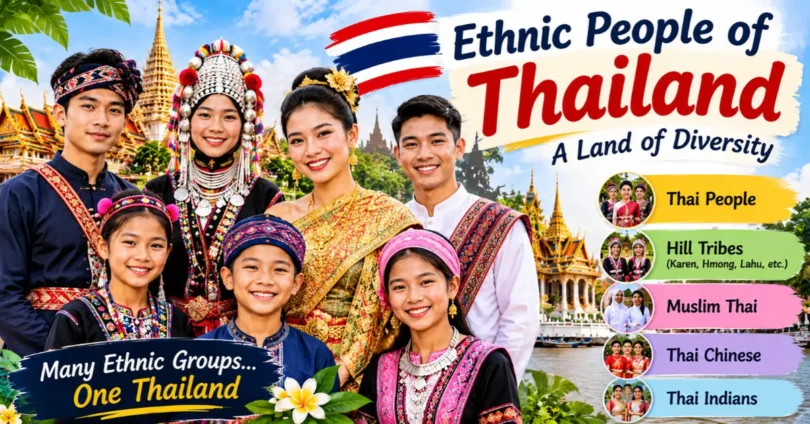
Thailand is home to many ethnic communities, each with its own culture, language, traditions, and way of life. The Ethnic People of Thailand, Include Central Thai, Isan, Malay, Chinese-Thai, Karen, Hmong, Akha, and several other groups. These communities have different histories and customs that make Thailand culturally rich and unique. Some live in busy cities, while others live in mountain villages and coastal areas. Learning about these ethnic groups helps us understand Thailand’s history, people, and cultural diversity.
Why Ethnic Diversity Makes Thailand Special
Ethnic diversity makes Thailand special because people from different communities bring their own cultures, languages, traditions, and ways of life. Each ethnic group adds something valuable to the country’s identity. Their traditional foods, colorful clothing, music, dances, festivals, and handicrafts make Thai culture more interesting and beautiful. Different communities also share their knowledge, skills, and customs with younger generations. Visitors can experience these cultural differences when they travel to different parts of Thailand. Most importantly, ethnic diversity teaches people to respect different backgrounds and live together peacefully.
Major Ethnic Groups of Thailand
Thailand has several major ethnic groups, and each community has its own history, language, culture, and traditions.
- Central Thai People: The largest ethnic community, mainly living in central Thailand and speaking the standard Thai language.
- Northern Thai People: Known for their unique northern traditions, local language, food, and traditional clothing.
- Northeastern Thai (Isan) People: Strongly influenced by Lao culture, with special food, music, and festivals.
- Southern Thai People: Known for their regional dialects, seafood, local customs, and cultural traditions.
These major ethnic groups make Thailand culturally diverse and give each region its own special identity.
Malay Ethnic Communities in Southern Thailand
Malay communities are an important part of southern Thailand and have their own language, religion, culture, and traditional lifestyle.
- Language: Many Thai Malays speak the Malay language and local dialects in their daily lives.
- Religion: Most Malay communities follow Islam and celebrate important Islamic festivals.
- Traditional Clothing: Men and women often wear traditional Malay clothes during religious events and special occasions.
- Food: Their traditional dishes include rice-based meals, seafood, and spicy local recipes.
- Family Customs: Family relationships, respect for elders, and community support are important parts of their culture.
- Cultural Traditions: Traditional music, local crafts, and religious celebrations help preserve their identity.
These communities add valuable cultural traditions to southern Thailand and make the country’s ethnic diversity richer.
Indigenous Hill Tribe Communities of Thailand
Thailand is home to several hill tribe communities, mainly living in the northern and western mountain areas.
- Karen People: Known for their traditional weaving, colorful clothing, and farming lifestyle.
- Hmong People: Famous for their colorful embroidered clothes, silver jewelry, and traditional New Year celebrations.
- Akha People: Recognized for their unique headdresses, traditional villages, and strong cultural customs.
- Lahu People: Known for their traditional music, dancing, hunting history, and community life.
- Lisu People: Famous for their bright clothing, handmade decorations, and cultural festivals.
- Mien (Yao) People: Recognized for their detailed embroidery, traditional clothing, and family customs.
These hill tribe communities help preserve Thailand’s cultural heritage through their unique traditions, skills, and lifestyles.
Understanding Ethnic Diversity in Thailand
Ethnic diversity in Thailand means that people from different backgrounds live together while keeping their own cultures, languages, and traditions. Some communities have lived in Thailand for many generations, while others came from nearby countries such as China, Laos, Cambodia, and Myanmar. These different groups have influenced Thai food, clothing, music, religion, and daily life. Ethnic communities also live in different parts of the country, including cities, mountains, villages, and coastal areas.
Languages Spoken by Different Ethnic Groups in Thailand
Different ethnic communities in Thailand speak various languages that reflect their history and cultural backgrounds.
- Thai Language: The main language used in schools, government offices, and daily communication.
- Isan Language: Widely spoken in northeastern Thailand and closely related to Lao.
- Malay Language: Spoken by many Malay communities in southern Thailand.
- Chinese Languages: Some Chinese-Thai families speak Mandarin, Teochew, and other Chinese languages.
- Khmer Language: Used by Khmer communities, especially near the Cambodian border.
- Karen Languages: Spoken by different Karen communities living mainly in northern and western Thailand.
- Hmong Language: Used by Hmong communities, especially in northern mountain areas.
- Lahu and Akha Languages: Spoken by their respective hill tribe communities.
These languages help ethnic groups protect their cultural identity and pass their traditions to future generations.
Challenges Faced by Ethnic Communities in Thailand
Many ethnic communities in Thailand face social and economic problems that can affect their daily lives and cultural traditions.
- Language Barriers: Some communities struggle to access education and public services because they speak different languages.
- Limited Education: Children in remote villages may have fewer schools and learning opportunities.
- Land Rights Issues: Some ethnic groups face difficulties protecting their traditional homes and farmland.
- Cultural Discrimination: Certain communities experience unfair treatment because of their ethnic backgrounds.
- Loss of Traditional Languages: Younger generations may stop speaking their native languages.
- Healthcare Access: People living in remote mountain areas may find it difficult to reach hospitals and medical services.
Addressing these challenges can help ethnic communities protect their rights, improve their lives, and preserve their cultural heritage.
Where Do Different Ethnic Groups Live in Thailand?
Different ethnic communities live across Thailand, with each region having its own cultural groups and traditions.
- Central Thailand: Mainly home to Central Thai people and many Chinese-Thai communities.
- Northern Thailand: Home to Northern Thai people and hill tribe groups such as Karen, Hmong, Akha, and Lisu.
- Northeastern Thailand: Mainly home to Isan people, along with Khmer and Kuy communities.
- Southern Thailand: Home to Southern Thai people and Malay communities, especially near the Malaysian border.
- Coastal Areas: Some Moken communities live along the Andaman Sea and nearby islands.
These different regions make Thailand a culturally diverse country with many unique communities and lifestyles.
How Thailand Protects Its Ethnic Cultures and Traditions
Thailand uses different efforts to protect ethnic cultures, local languages, and traditional ways of life.
- Cultural Education: Schools and community programs teach children about local history and traditions.
- Language Preservation: Communities encourage younger generations to learn and speak their native languages.
- Traditional Festivals: Local celebrations help keep cultural customs, music, and dances alive.
- Handicraft Support: Traditional weaving, embroidery, and handmade arts receive support through local activities.
- Community Participation: Local people help protect their cultural heritage and share their knowledge.
- Cultural Awareness: Educational activities encourage respect for different ethnic backgrounds and traditions.
These efforts help preserve Thailand’s cultural diversity and pass valuable traditions on to future generations.
Other Ethnic Communities Found in Thailand
Besides the major groups, Thailand is home to several other ethnic communities with their own histories, languages, and cultural traditions.
- Khmer Communities: Mostly found near the Cambodian border, they share Khmer language, food, and cultural traditions.
- Mon Communities: Known for their ancient history, Buddhist traditions, and traditional festivals.
- Kuy People: Mainly live in northeastern Thailand and are known for their traditional skills and local customs.
- Shan Communities: Found mainly in northern Thailand, they share cultural links with Myanmar and have unique clothing and traditions.
- Moken People: Known as sea-based communities who traditionally live along coastal areas and depend on fishing.
These communities add more cultural richness to Thailand and help keep its diverse traditions alive.
Common FAQs about Ethnic People of Thailand
Here are some FAQs of Ethnic People of Thailand:
What is the difference between Thai nationality and Thai ethnicity?
Thai nationality refers to being a citizen of Thailand, while Thai ethnicity refers to a person’s cultural and ancestral background.
Are all people in Thailand ethnically Thai?
No, Thailand has people from many ethnic backgrounds, including Chinese, Malay, Khmer, and other communities.
Do ethnic communities in Thailand have their own traditional festivals?
Yes, many communities celebrate special festivals based on their history, religious beliefs, farming seasons, and local customs.
Can ethnic minority children study in Thai schools?
Yes, children from ethnic minority communities can attend Thai schools, although language differences and remote locations may create difficulties.
Do ethnic groups in Thailand have different naming traditions?
Yes, naming customs can vary between communities because of different family traditions, languages, and religious beliefs.
How does tourism affect ethnic communities in Thailand?
Tourism can create jobs and support local crafts, but poorly managed tourism may also affect privacy and traditional lifestyles.
Do ethnic communities in Thailand maintain their traditional crafts?
Yes, many communities continue skills such as weaving, basket making, embroidery, and handmade textile production.
Why is it important to study the ethnic history of Thailand?
Studying ethnic history helps people understand the country’s past, respect different communities, and protect valuable cultural knowledge.
Conclusion
The Ethnic People of Thailand represent a rich mix of cultures, languages, traditions, and histories. Each community has its own identity and contributes something special to Thai society. From traditional clothing and local food to unique languages and cultural celebrations, these communities make Thailand an interesting and diverse country. Understanding their backgrounds also helps people respect different cultures and appreciate their importance. Protecting ethnic traditions, languages, and cultural heritage is important for future generations. Every ethnic community is a valuable part of Thailand’s history and national identity.