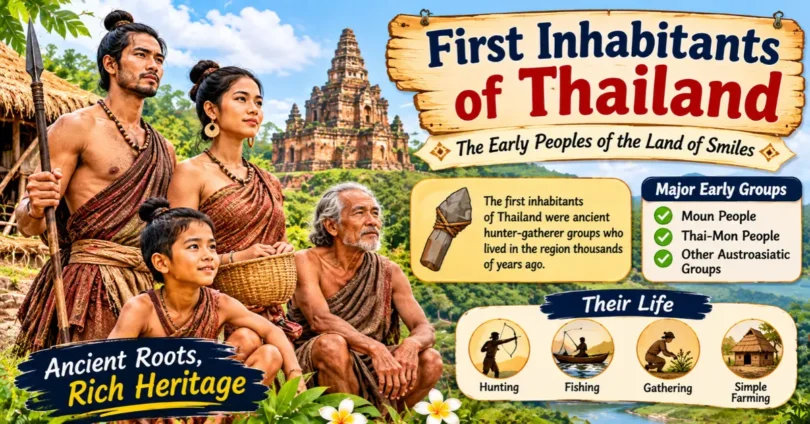
The First Inhabitants of Thailand, Were ancient people who lived in the region thousands of years ago. They survived by hunting animals, catching fish, collecting wild plants, and later growing crops. Over time, they built small villages, made tools, and developed new ways of living. Archaeological discoveries, such as ancient tools, pottery, and human remains, help us understand their lives. Learning about these early people gives us a better picture of how Thailand’s history and culture began.
What Happened to Thailand’s Earliest Inhabitants?
Thailand’s earliest inhabitants did not simply disappear. Over thousands of years, their lives changed because of migration, farming, trade, and contact with other communities. Some groups settled in villages and became farmers, while others moved to different areas. New people also arrived in the region and shared their languages, skills, and customs.These communities mixed and influenced one another. Their history became part of the rich cultural background of modern Thailand.
Who Were the First People to Live in Thailand?
The first people to live in Thailand were prehistoric communities who settled in the region thousands of years ago.
- Early Hunter-Gatherers: They hunted animals, caught fish, and collected wild fruits and plants.
- Cave Dwellers: Some early people lived in caves and used natural shelters for protection.
- Ancient Farmers: Over time, people learned to grow rice and other crops.
- River Communities: Many groups settled near rivers because water and food were easy to find.
- Early Village People: Some communities built homes and started living together in permanent villages.
- Different Populations: Over many centuries, new groups arrived and shared their languages and traditions.
These early communities helped shape the history and development of ancient Thailand.
Prehistoric Human Life in Ancient Thailand
Prehistoric people in ancient Thailand lived simple lives and depended on nature for food, shelter, and safety.
- Food Gathering: They collected wild fruits, roots, seeds, and other plants.
- Hunting Animals: They hunted animals to get meat and other useful materials.
- Fishing: They caught fish from rivers and lakes for food.
- Simple Tools: They made tools from stones, bones, and wood.
- Natural Shelters: They lived in caves or built simple shelters using natural materials.
- Group Living: They lived in small groups and helped each other find food and stay safe.
- Early Farming: Later, some communities started growing crops and keeping animals.
These daily activities helped early people survive and build the first settled communities in Thailand.
Archaeological Evidence of Thailand’s Earliest Inhabitants
Archaeologists have found many ancient objects and remains that help explain how the first people lived in Thailand.
- Stone Tools: Ancient stone tools show how early people hunted animals and prepared food.
- Human Remains: Old bones and teeth provide clues about the lives of prehistoric people.
- Ancient Pottery: Clay pots show how early communities stored food and prepared meals.
- Cave Discoveries: Archaeological findings in caves reveal how people used natural shelters.
- Burial Sites: Ancient graves help researchers understand early customs and beliefs.
- Animal Bones: These remains show which animals early people hunted and ate.
- Old Settlements: Ruins and other objects provide information about ancient village life.
These archaeological discoveries help us understand the lifestyle and history of Thailand’s earliest inhabitants.
How Ancient Communities Shaped Thailand’s Development
Ancient communities played an important role in shaping Thailand’s society, farming, culture, and daily life.
- Agriculture: Early farmers introduced rice growing and improved food production.
- Village Development: Permanent settlements helped communities grow and work together.
- Pottery Making: People developed pottery skills to store food and water.
- Traditional Crafts: Ancient skills helped create tools, baskets, and useful household items.
- Trade: Communities exchanged food, tools, and other goods with nearby groups.
- Cultural Traditions: Different communities shared customs, beliefs, and ways of life.
- Social Growth: Working together helped people build stronger and more organized communities.
These early developments helped create the foundation for Thailand’s later society and culture.
How Farming Changed Life in Ancient Thailand
Farming changed the lives of ancient people in Thailand by giving them a more regular food supply and helping villages grow.
- Rice Growing: People started growing rice as an important food crop.
- Permanent Homes: Farming encouraged families to settle in one place instead of moving often.
- Animal Raising: Some communities began keeping animals for food and farming work.
- Food Storage: People learned to store extra crops for future use.
- Village Growth: Farming helped small communities become larger villages.
- New Tools: Farmers developed tools to prepare land and harvest crops.
- Community Work: People worked together to plant, care for, and collect crops.
Farming made life more settled and helped ancient communities develop stronger societies in Thailand.
How the First Inhabitants Influenced Modern Thai Culture
Thailand’s earliest communities helped shape some traditions, skills, and ways of life that influenced later generations.
- Rice Farming: Early farming practices helped make rice an important part of Thai food and agriculture.
- Traditional Food: Ancient ways of growing and preparing food influenced local eating habits.
- Pottery Skills: Early pottery-making helped develop traditional crafts.
- Local Communities: Village life encouraged cooperation and strong community relationships.
- Handicrafts: Early skills in making tools and useful objects influenced later craft traditions.
- Cultural Exchange: Contact between different groups helped shape Thailand’s diverse culture.
- Traditional Lifestyle: Old farming and fishing practices influenced life in many local communities.
The early inhabitants helped build cultural foundations that influenced Thailand’s development over many generations.
Where Did the Earliest Communities Settle?
The earliest communities in Thailand chose places where they could find food, water, shelter, and safety.
- Near Rivers: Many people settled near rivers because they provided fresh water and fish.
- Around Lakes: Lakes offered water, food, and useful natural resources.
- Inside Caves: Some early humans used caves as shelters to stay safe from wild animals and bad weather.
- Fertile Land: People settled in areas with good soil for growing crops.
- Forest Areas: Forests provided fruits, plants, wood, and animals for food.
- Open Valleys: Flat areas gave people space to build homes and grow food.
- Northeastern Thailand: Archaeological sites such as Ban Chiang show evidence of ancient village life.
These natural places helped early communities survive and develop permanent settlements in Thailand.
The Rise of Early Farming Communities
Early farming communities developed in Thailand when people began growing crops and living in permanent settlements.
- Rice Cultivation: People started growing rice as an important source of food.
- Animal Keeping: Some families began raising animals for food and farming.
- Permanent Villages: Farming encouraged people to build homes and stay in one place.
- Food Storage: People stored extra crops for times when food was difficult to find.
- Better Farming Tools: They developed simple tools to prepare land and collect crops.
- Community Cooperation: Families worked together to grow food and protect their villages.
- Population Growth: A regular food supply helped communities become larger.
Early farming changed people’s lifestyles and helped ancient villages grow into stronger communities.
Common FAQs about First Inhabitants of Thailand
Here are some FAQs of First Inhabitants of Thailand:
Were the First Inhabitants of Thailand Neanderthals?
There is no clear evidence that Neanderthals lived in Thailand. The region has evidence of other ancient human populations, including early modern humans.
What Was Thailand Called in Ancient Times?
Thailand was not known by its modern name in prehistoric times. The name Siam was used in later historical periods before the country officially became Thailand.
Did Ancient People in Thailand Use Metal Tools?
Yes. Over time, some communities learned to use bronze and later iron to make tools, weapons, and other useful objects.
What Is the Oldest Known Human Fossil Found in Thailand?
Thailand has several important prehistoric fossil discoveries. Researchers study ancient human remains, teeth, and bones to understand early populations, but identifying one as the oldest can be difficult.
Did the First Inhabitants of Thailand Have Writing?
Early prehistoric communities did not have a known writing system. Written records appeared much later in the region’s history.
What Animals Lived in Ancient Thailand?
Ancient Thailand had many wild animals, including elephants, deer, monkeys, and other forest animals. Some species were different from those found in the region today.
How Did Ancient People Travel in Thailand?
Early people mainly travelled on foot through forests, hills, and open land. As communities developed, rivers also became useful routes for movement and trade.
What Can Museums Teach Us About Thailand’s First Inhabitants?
Museums display ancient pottery, tools, ornaments, and archaeological objects. These items help visitors understand prehistoric technology, art, and daily life.
Conclusion
The First Inhabitants of Thailand played an important role in the country’s ancient history and development. These early people built communities, developed farming skills, created useful tools, and learned to live with nature.Their lifestyles changed through migration, trade, and contact with other populations. Archaeological discoveries help us understand their daily activities and cultural development. Although modern Thailand is very different from the past, the history of its earliest inhabitants remains an important part of its heritage.