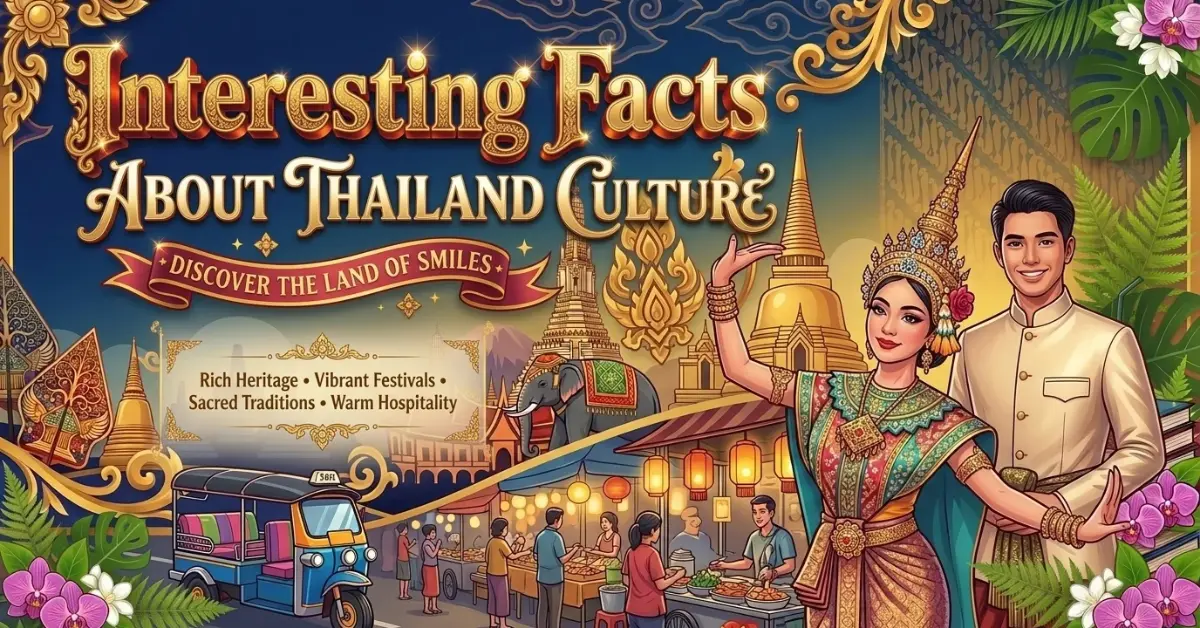
Interesting Facts About Thailand Culture, Help us understand the country’s unique traditions, beliefs, and way of life. Thailand is famous for its friendly people, beautiful temples, colorful festivals, and delicious food. Thai culture also teaches respect for elders, kindness toward others, and the importance of family. From traditional greetings to special celebrations, many customs have been followed for generations. Learning these facts gives readers a better understanding of Thailand’s rich culture and the daily lives of its people.
Amazing Stories Behind Thailand’s Famous Festivals
Thailand’s famous festivals are full of history, joy, and cultural meaning. Songkran celebrates the traditional Thai New Year, while Loy Krathong is known for floating decorated baskets on rivers and lakes. These celebrations bring families and communities together through special activities, music, and local customs. Interesting facts about Thailand culture can be seen in these festivals, as they reflect the country’s beliefs, history, and respect for traditions. Each celebration helps preserve Thailand’s cultural heritage and allows younger generations to learn about the customs passed down by their elders.
Interesting Facts About Thailand Culture That Make It Unique
Thailand has many special traditions and customs that make its culture different from other countries.
- The Land of Smiles: Thailand is often called the Land of Smiles because smiling is an important part of social life.
- The Wai Greeting: Thai people often greet others by placing their palms together and slightly bowing their heads.
- Respect for Elders: Showing respect to older people is an important Thai cultural value.
- Buddhist Traditions: Buddhism has a strong influence on Thai temples, festivals, and daily life.
- Traditional Festivals: Celebrations like Songkran help families enjoy traditions passed down through generations.
These unique customs make Thai culture interesting and show the importance of kindness, respect, and tradition in everyday life.
Unusual Thai Customs With Deep Meanings
Thailand has many unique customs that show respect, kindness, and traditional values in everyday life.
- The Wai Greeting: Thai people press their palms together and bow slightly to greet others or show respect.
- Respect for the Head: In Thai culture, the head is traditionally considered an important part of the body, so touching someone’s head is usually avoided.
- Removing Shoes: People often remove their shoes before entering homes and some sacred places as a sign of cleanliness and respect.
- Respect for Elders: Younger people commonly show respect to older family members through polite words and actions.
- Polite Behavior: Speaking calmly and avoiding public arguments are valued in many Thai social settings.
These customs reflect Thailand’s strong focus on respect, good manners, and peaceful relationships.
Thai Family Life and Values You May Not Know
Thai family life is built on love, respect, and support. Family values play an important role in everyday life in Thailand.
- Respect for Elders: Younger family members are taught to respect older people and listen to their advice.
- Strong Family Bonds: Family members often stay connected and help each other during difficult times.
- Caring for Parents: Many adult children help care for their parents as they grow older.
- Family Gatherings: Relatives come together during festivals, holidays, and special occasions.
- Teaching Good Manners: Parents teach children to be polite, kind, and respectful toward others.
- Helping One Another: Family members often share responsibilities and support each other’s needs.
These family values help Thai people maintain strong relationships and keep their traditions alive across generations.
Cultural Differences Across Thailand’s Regions
Thailand’s regions have their own traditions, foods, clothing, and ways of life that make the country culturally diverse.
- Northern Thailand: Known for traditional Lanna culture, wooden temples, local crafts, and gentle folk music.
- Northeastern Thailand: Famous for lively folk music, spicy food, and community festivals.
- Central Thailand: Influenced by Bangkok’s royal history, traditional arts, and important Buddhist temples.
- Southern Thailand: Known for coastal traditions, seafood, Muslim communities, and diverse cultural influences.
- Local Languages: People in different regions may speak local dialects alongside the Thai language.
- Traditional Festivals: Regional celebrations often reflect local history, beliefs, and community life.
These regional differences make Thai culture rich and show how local traditions shape everyday life across the country.
Unique Thai Customs and Social Etiquette
Thai customs show the importance of respect, kindness, and good manners in everyday life.
- Wai Greeting: People press their palms together and bow slightly to greet others respectfully.
- Respect for Elders: Younger people show respect to older people and teachers.
- Removing Shoes: Shoes are usually removed before entering homes and some temples.
- Head Etiquette: Touching another person’s head is generally avoided because the head is traditionally considered sacred.
- Polite Speech: Speaking calmly and using polite words are important social habits.
- Temple Manners: Visitors should dress modestly and behave respectfully in temples.
These customs help preserve Thai traditions and encourage respectful relationships in society.
Interesting Facts About Thai Traditional Clothing
Thai traditional clothing reflects the country’s history, local identity, and artistic skills.
- Chut Thai: This is the name commonly used for traditional Thai clothing.
- Thai Silk: Many traditional outfits use beautiful silk fabric made in Thailand.
- Different Styles: Traditional clothing varies by occasion, region, and cultural background.
- Formal Outfits: Special Thai outfits are worn at weddings, ceremonies, and official events.
- Beautiful Patterns: Traditional fabrics often feature detailed designs and bright colors.
- Royal Influence: Royal clothing styles have helped shape some forms of formal Thai dress.
Thai traditional clothing remains an important symbol of Thailand’s cultural heritage and craftsmanship.
Interesting Facts About Thai Arts and Music
Thai arts and music reflect the country’s history, beliefs, and traditional way of life.
- Classical Thai Dance: Traditional dances use graceful movements and special hand gestures to tell stories.
- Khon Masked Drama: This traditional performance combines dance, music, colorful costumes, and masks.
- Traditional Thai Music: Instruments such as the ranat (a wooden xylophone) create unique sounds.
- Thai Silk: Beautiful silk fabrics are used in traditional clothing and handmade crafts.
- Temple Art: Thai temples feature detailed paintings, sculptures, and colorful designs that often show Buddhist stories.
- Puppet Shows: Traditional Thai puppetry brings old stories and cultural characters to life.
Thai arts and music preserve cultural stories and help pass traditional skills from one generation to the next.
Common FAQs about Interesting Facts About Thailand Culture
Here are some FAQs of Interesting Facts About Thailand Culture:
Why is the elephant important in Thai culture?
Elephants have played an important role in Thailand’s history, royal ceremonies, and traditional stories. Today, the elephant is also a national symbol.
What is the meaning of the Thai national flag?
Thailand’s flag has five horizontal stripes in red, white, and blue. These colors are commonly linked to the nation, religion, and monarchy.
Why do many Thai people have nicknames?
Many Thai people use short, informal nicknames in daily life because they are easy to remember and use among family and friends.
What is the traditional Thai New Year called?
The traditional Thai New Year is called Songkran. It takes place in April and is known for family gatherings, water celebrations, and paying respect to elders.
What is the importance of Thai silk?
Thai silk is a valued traditional craft made by skilled weavers. Its bright colors and detailed patterns reflect local creativity and regional heritage.
Why are Thai temples decorated with colorful designs?
Many temples feature colorful mosaics, detailed carvings, and decorative roofs. These designs express religious beliefs, artistic skills, and traditional craftsmanship.
What role do elephants play in Thai festivals?
Elephants have appeared in historical celebrations and cultural events. However, modern festivals differ, and responsible events should protect elephant welfare.
How does Thai culture influence modern life?
Thai cultural values influence family relationships, respectful communication, traditional ceremonies, and community activities, even as modern lifestyles continue to change.
Conclusion
Interesting facts about Thailand culture show how traditions, religion, food, festivals, and family values shape the lives of Thai people. From the respectful wai greeting to traditional dance and colorful celebrations, every custom has its own meaning. These cultural practices help preserve Thailand’s history while connecting younger generations with their roots. Learning about Thai culture helps us understand different ways of life and appreciate the beauty of cultural diversity.